








Hormonal birth control isn’t one-size-fits-all. From the pill to the patch, there are several different methods of hormonal birth control and each works to prevent pregnancy in a unique way.
If you’re using or considering a hormonal birth control option, you may wonder how your choice actually impacts your body and biometrics. Below, find out how each method works to prevent pregnancy, as well as how each method impacts your body’s signals—and how that translates in your Oura data.
What Is Hormonal Birth Control?
Hormonal birth control is a group of medications that, when used correctly, reduce the chance that you will get pregnant if you have sex. They rely on hormones—typically on a combination of estrogen and progesterone, or sometimes a type of progesterone on its own—to regulate the menstrual cycle and prevent pregnancy.
These hormones prevent pregnancy in different ways depending on the type. They may prevent or delay ovulation (the release of an egg), thicken cervical mucus to block sperm, or alter the uterine lining to prevent implantation.
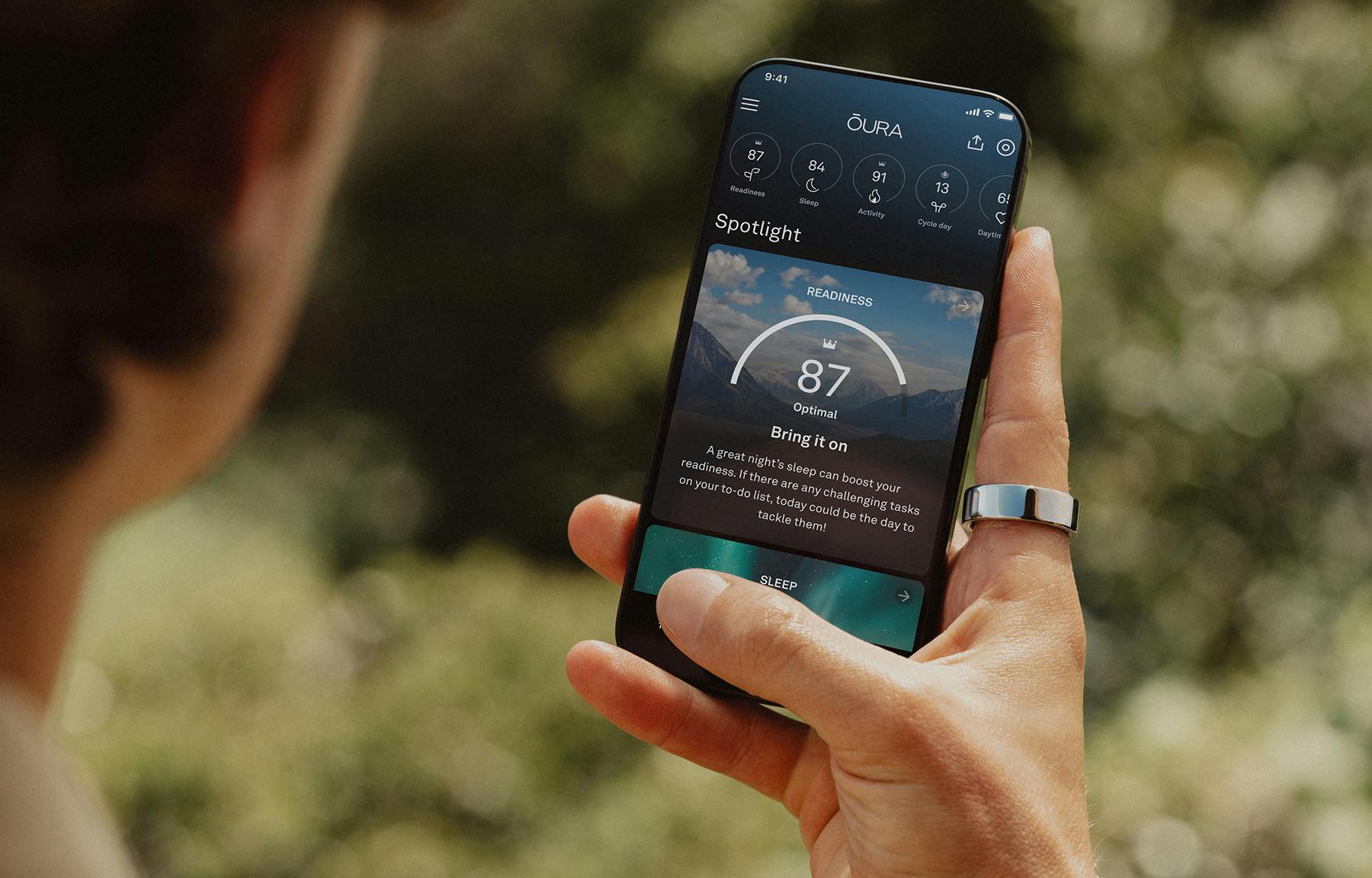
| Oura’s Cycle Insights experience now offers Hormonal Birth Control support, designed to help you track symptoms, predict bleeding, and better understand how hormonal birth control impacts your body on a personal level. |
How Do Different Types of Hormonal Birth Control Work?
1. Combined Hormonal Methods
The birth control pill, patch, and vaginal ring all contain hormones from two categories: estrogen and progesterone. Depending on the brand and dosing, there are a variety of different types of estrogens or progesterones (often called progestins) that can be used.
Together, they suppress the hormonal signals between your brain and ovaries that control your cycle, lowering follicle-stimulating hormone (FSH) which then prevents eggs from maturing, and blocking the luteinizing hormone (LH) surge which then prevents ovulation.
Additionally, this combination of hormones thickens cervical mucus, making it harder for sperm to reach the uterus and thin the uterine lining making it less likely that a fertilized egg could implant.
With these choices, the way you take the hormones may differ (see chart below), but they interact with your body in similar ways.
| Combined Hormonal Method | Hormonal Delivery Method | Frequency of Use |
| Birth control pill | Oral | Take the pill by mouth at the same time every day. |
| Patch | Transdermal | Replace with a new patch once per week. |
| Vaginal Ring | Vaginal | Replace ring every three weeks. |
2. Progestin-only Pills
Often called the “mini-pill,” this progestin-only method traditionally works by thickening cervical mucus and sometimes stopping ovulation. Newer versions (such as those with drospirenone) are more reliable at stopping ovulation completely, so long as they are taken at the same time each day.
3. Implant
An implant is a small rod placed under the skin of the upper arm. It releases progesterone steadily for up to three years, stopping ovulation and thickening cervical mucus.
4. Intrauterine Devices (IUDs)
Hormonal IUDs release progesterone into the uterus, which thickens cervical mucus and makes the uterine lining thinner. Some women may still ovulate, but pregnancy is prevented by the local effects on the inside of the uterus.
Note that there is an IUD option that is hormone-free: the copper IUD. It is also placed inside the uterus and works by releasing copper ions, which interfere with sperm movement and prevent fertilization.
5. Hormonal Injections
A single injection releases progesterone slowly over one to three months. This constant hormone level stops ovulation and thickens cervical mucus.
READ MORE: 5 Questions to Consider When Choosing a Birth Control Method
How Hormonal Birth Control Affects Your Body & Biometrics
Each form of hormonal birth control has unique effects on your physiology, and in turn, your biometrics and Oura data.
For those not on hormonal birth control, monthly patterns may emerge in your Oura data, such as biphasic (meaning two phases) temperature trends—lower in the first half of the month, rising in the latter, fluctuating HRV patterns, and fluctuating resting heart rates.
For those on hormonal birth control, keep reading to explore what happens to your body temperature trends, HRV, resting heart rate, and sleep quality each month, depending on the hormonal birth control method you choose.
1. Temperature Trends
Cyclic Contraception
Examples: Birth control pill, patch, and ring (including placebo weeks)
You may notice a slightly higher and more stable pattern in your temperature trends across your cycle during the time you are taking your hormones. Research has found that for women taking the pill, body temperature rises by about 0.3°C during the active pill phase, mimicking the luteal phase elevation seen in natural cycles.
In addition, your temperature trends may lack a strong biphasic pattern. Why? That biphasic pattern happens after ovulation. Since these methods work to prevent pregnancy by preventing ovulation, patterns associated with ovulation are absent.
Continuous Hormonal Contraception
Examples: Injection or implant (or the pill, patch, or ring without using a placebo week)
Using continuous and systemic hormones provides a steady dose of hormones each day. Because the dose of progesterone is the same every single day, most people see a fairly stable temperature pattern over time.
Hormonal IUD
Because these devices use a lower, localized dose of hormones, you might still see fluctuations in your temperature data. For some, this happens nearly every month; for others, it only happens once in a while. This occurs because some individuals continue to ovulate occasionally even with an IUD in place.
2. Heart Rate Variability (HRV)
Cyclic Contraception
Examples: Birth control pill, patch, and ring (including placebo weeks)
HRV is a primary marker of how your autonomic nervous system handles stress, and can change based on hormone levels. Typically, HRV tends to be higher at the start of a cycle and drops in the week before a period as the body prepares for menstruation in those who are not using hormones. When using hormones, a cyclic pattern may also be seen, often with a lower HRV on days you are taking hormones compared to placebo weeks.
Continuous Hormonal Contraception
Examples: Injection or implant (or the pill, patch, or ring without using a placebo week)
With a steady state of hormones each day, you will not see much variation in HRV week over week.
Hormonal IUD
For some individuals using hormonal IUDs, they continue to ovulate occasionally even with an IUD in place. The IUD is still working, but it can lead to fluctuation in biometrics such as HRV along with ovulation.
Research also suggests that hormonal contraceptive users may have lower overall HRV compared to those who aren’t using hormonal contraceptives.
3. Resting Heart Rate (RHR)
Cyclic Contraception
Examples: Birth control pill, patch, and ring (including placebo weeks)
Similar to how HRV changes across the cycle, your resting heart rate tends to be lower at the start of a cycle and increases after ovulation. When someone is taking hormones for birth control, a cyclic pattern can be seen, often with a higher heart rate on days you are taking hormones compared to placebo weeks.
Continuous Hormonal Contraception
Examples: Injection or implant (or the pill, patch, or ring without using a placebo week)
The steady state of hormones each day often means that there is not much variation in heart rate over time.
Hormonal IUD
For some individuals using hormonal IUDs, they continue to ovulate occasionally even with an IUD in place. This background ovulation can sometimes mean that trends of increases and then decreases in RHR over time can be seen.
4. Sleep Quality: Mixed Results
Different people have different responses to using hormones. For some, estrogen contributes strongly to their circadian rhythm, and so some women may experience changes in their sleep when they use hormonal birth control that contains estrogen.
Women of reproductive age may see an association between hormonal birth control and increased insomnia, daytime sleepiness, and sleep duration as well as lower sleep quality. However, for others, particularly premenopausal women, sleep may improve.
Ultimately, high-quality research on how hormonal birth control impacts sleep is limited and a consensus has not been reached.
Know Your Patterns With Oura
Choosing a birth control method is a deeply personal decision that balances lifestyle, health goals, and how you want to feel in your own body. Whether you opt for the steady state of an implant or the cyclic nature of the pill, understanding the “why” behind your biometric shifts can turn data into a tool for empowerment rather than a source of confusion.
By tracking your trends with Oura, you can move beyond guesswork. Remember, while science gives us a baseline of what to expect, your experience is unique. If you notice patterns that don’t feel right or have questions about how a specific method is affecting your well-being, use your Oura data as a conversation starter with your healthcare provider.