

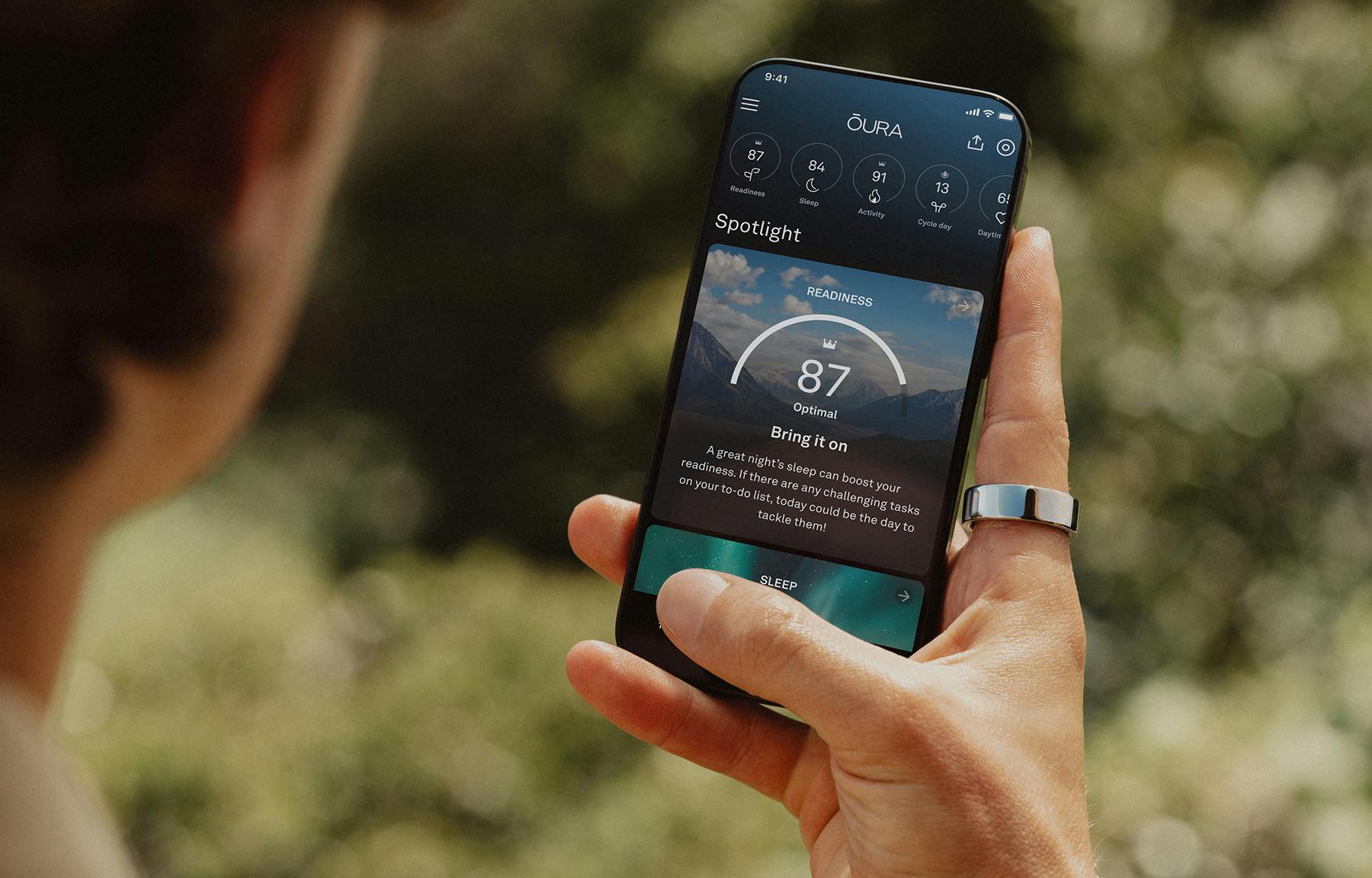




Oura’s Daytime Stress feature empowers members to track, understand, and better manage their physiological stress.
As Tuomas Romppainen, Senior Product Manager at Oura, who led development of the Stress feature, says: “We wanted to rebrand stress and help members see stress as a resource rather than something to avoid at all costs. Members will now have a more holistic picture of their overall wellbeing, and we have a new sensing capability for us to build upon in the future.”
READ MORE: Inside the Ring: Understanding Oura’s New Daytime Stress Feature
The State of Stress
“Stressed-out” has become our state of mind. According to Gallup, 40% of people around the world say they experienced “a lot of stress” the day before. In the United States, 76% of adults report health impacts due to stress, with more than a quarter saying they are so stressed they cannot function.
Stress isn’t just in your head; it can also affect your physical health. Chronic stress is linked to conditions such as heart disease, obesity and metabolic syndrome, type 2 diabetes, and arthritis. It can also lead to other mental health conditions such as depression and anxiety.
Perhaps unsurprisingly, stress can also interfere with your ability to fall asleep, stay asleep, and experience restorative deep sleep. It also disrupts the normal progression of sleep stages, particularly REM sleep.
READ MORE: How Stress Affects Your Sleep
Not All Stress Is “Bad”
That being said, not all stress is bad. Research shows that a type of stress known as hormetic stress can improve and enhance your health and resilience in the long run. Examples of hormetic stress can include exercise, intermittent fasting, exposure to cold or heat, and even small challenges like a crossword puzzle or mind game.
Plus, some fun and relaxing activities can also be perceived as stressful by your body, and show up in your Oura App as periods of stress—think: a sauna session, a competitive game of pickleball, or even a dinner party with friends.
LEARN MORE: Reframing Stress: The Difference Between “Bad” and “Good” Stress
New to Oura: Post-Activity Stress
Exercise is one of the most common forms of hormetic stress, and your Oura App accounts for it. If Oura detects both a completed activity and elevated stress, it marks that period on your Daytime Stress graph as “Post-activity stress.” This helps you to easily distinguish between stress due to exercise and stress due to other lifestyle factors.
What Does Daytime Stress Measure?
How might stress appear in your biometrics? A lower-than-usual HRV, for instance, can indicate that your sympathetic nervous system is overworked. Stress might also show up as a faster resting heart rate and higher respiratory rate, indicating a rapid heartbeat and fast, shallow breathing — both of which are features of a stress response.
Additionally, when exposed to stress, your peripheral body temperature (measured at the base of your fingers), can dip. This is because the blood vessels in your hands and fingers can constrict and reduce blood flow.
Find more details into how Oura’s Daytime Stress feature measures your biometric responses to stress here.
How Can I Monitor My Stress Levels Throughout The Day?
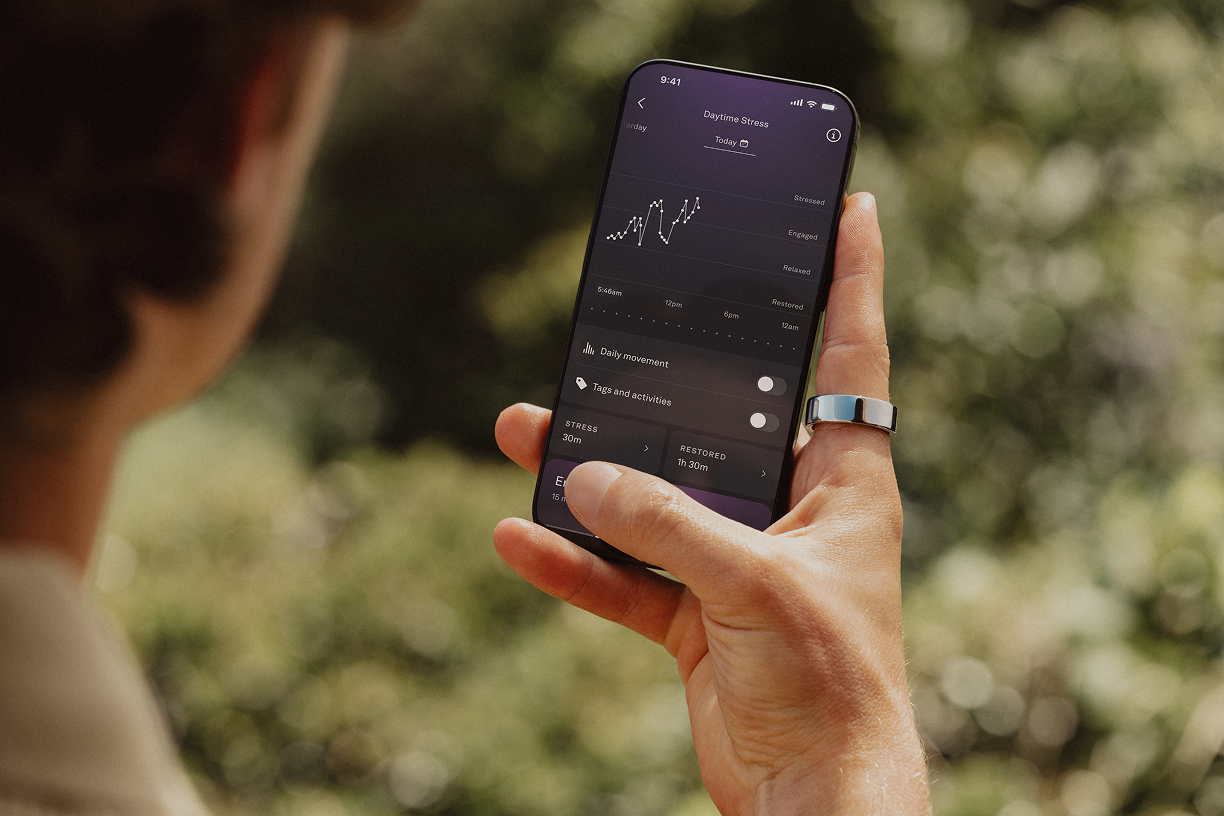
You can use the Daytime Stress Feature to keep an eye on your physiological stress levels, which will be categorized into one of four zones:
- Stressed: Your body is experiencing signs of stress. It’s common and normal, but it also serves as a sign to seek Restorative Time.
- Engaged: Your body is showing some elevated signs of stress, but it can potentially be good for productivity or performance.
- Relaxed: Your body has moved from a state of stress into one of mild recovery.
- Restored: Your body is recharging in a state of pure calm.
LEARN MORE: What Is Daytime Stress?
Contextual Stress
You can view additional information about your daytime stress levels when opening the Daytime Stress detail view. This view includes two toggles: one for “Daily movement” and one for “Tags and activities.” Toggling these on will create an overlay on the daily stress graph that provides additional context about the relationship between activity and stress.
Common triggers for rising stress throughout the day may include:
- External physical: alcohol, training, sauna, medication
- Internal: illness or infection, PMS, pregnancy, burnout, psychological stressors
- Environmental: altitude, noise, humidity
The daily movement graph is identical to the movement graph on the Activity screen. Daytime Stress analysis is not available during physical activity as physiological stress and recovery states can only be measured during no or low movement periods.
Tags and activities are marked on the graph’s timeline. Tap on a tag to highlight it on the graph. You can also add a tag directly from the Daytime Stress screen.
Above the insight message are totals for your day’s Stressed and Restored times. Tapping on either will take you to that metric’s graph in Trends.
Frequently Asked Questions
Can a wearable detect anxiety?
Oura can’t detect psychological stress; it detects physiological activation such as changes in heart rate, HRV, and skin temperature that accompany a stress response. Oura is not a medical device or a diagnostic tool.
How do different wearables measure stress?
Most consumer wearables measure physiological stress from autonomic nervous system signals, most commonly heart rate variability. What differentiates them is how many signals they use, whether they compare against your personal baseline, and how much of your day they cover. Oura combines four signals including heart rate, HRV, motion, and skin temperature, and then compares to baselines the algorithm learns for you individually, adapting as those baselines shift over time. That means a “Stressed” reading is relative to your normal, not to a population average.
About the Oura Experts
Mari Karsikas, PhD, is the Head of Product Science at Oura. She has more than 20 years of experience in research and product development based on patient and health data of hospitals and health technology companies. She has a Doctor of Technology degree focused on intelligent systems and biosignal processing. In her free time, she loves kite skiing and arctic adventures in the northern Finland where she lives.
Tuomas Romppainen is a Senior Product Manager in Oura’s wellbeing squad, responsible for developing core wellbeing features at Oura. Holding degrees in both exercise physiology and medical engineering, Tuomas possesses a comprehensive grasp of the fundamental principles essential for crafting award-winning wearable products. He has vast experience from the wearable industry having worked with dozens of different wearable products and features for more than a decade. Tuomas’ passion is building meaningful and genuinely useful products that empower individuals on their journey to improved health.