




Throughout your menstrual cycle, your body temperature changes in response to fluctuating hormone levels during the different phases. These temperature fluctuations can provide crucial insights into your menstrual cycle and reproductive health.
Oura can be a helpful tool for spotting changes in your entire body during your menstrual cycle by delivering accurate, personalized resting heart rate, heart rate variability (HRV), respiratory rate, sleep, and body temperature trends.
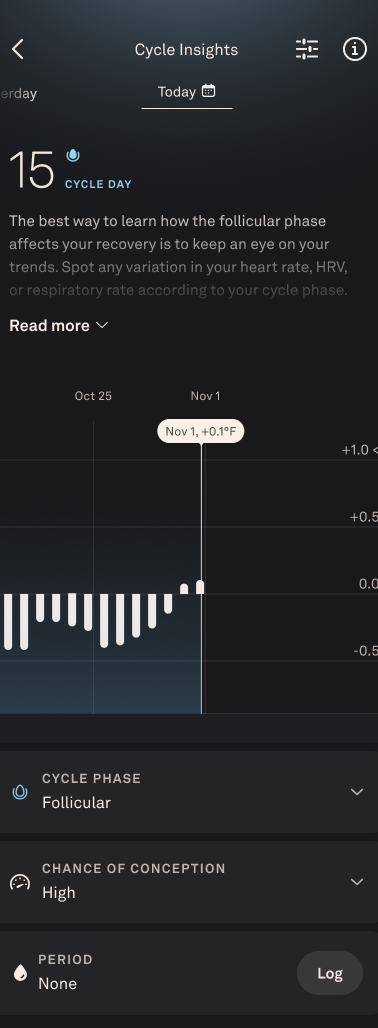
Oura’s Cycle Insights feature starts showing your body temperature trends after your first night of sleep data, and predictions will begin within that first cycle of wearing the ring. You can view your Body Temperature Graph on the Home screen of your Oura App and tap on Cycle Insights for a more detailed overview.
To help you make the most of Oura’s temperature tracking features, let’s take a look at the two phases of the menstrual cycle and how to track them using Oura.
RELATED: How This Health Coach and New Mom Uses Oura to Prioritize Sleep and Track Her Cycle
How Does Your Body Temperature Change During The Menstrual Cycle?
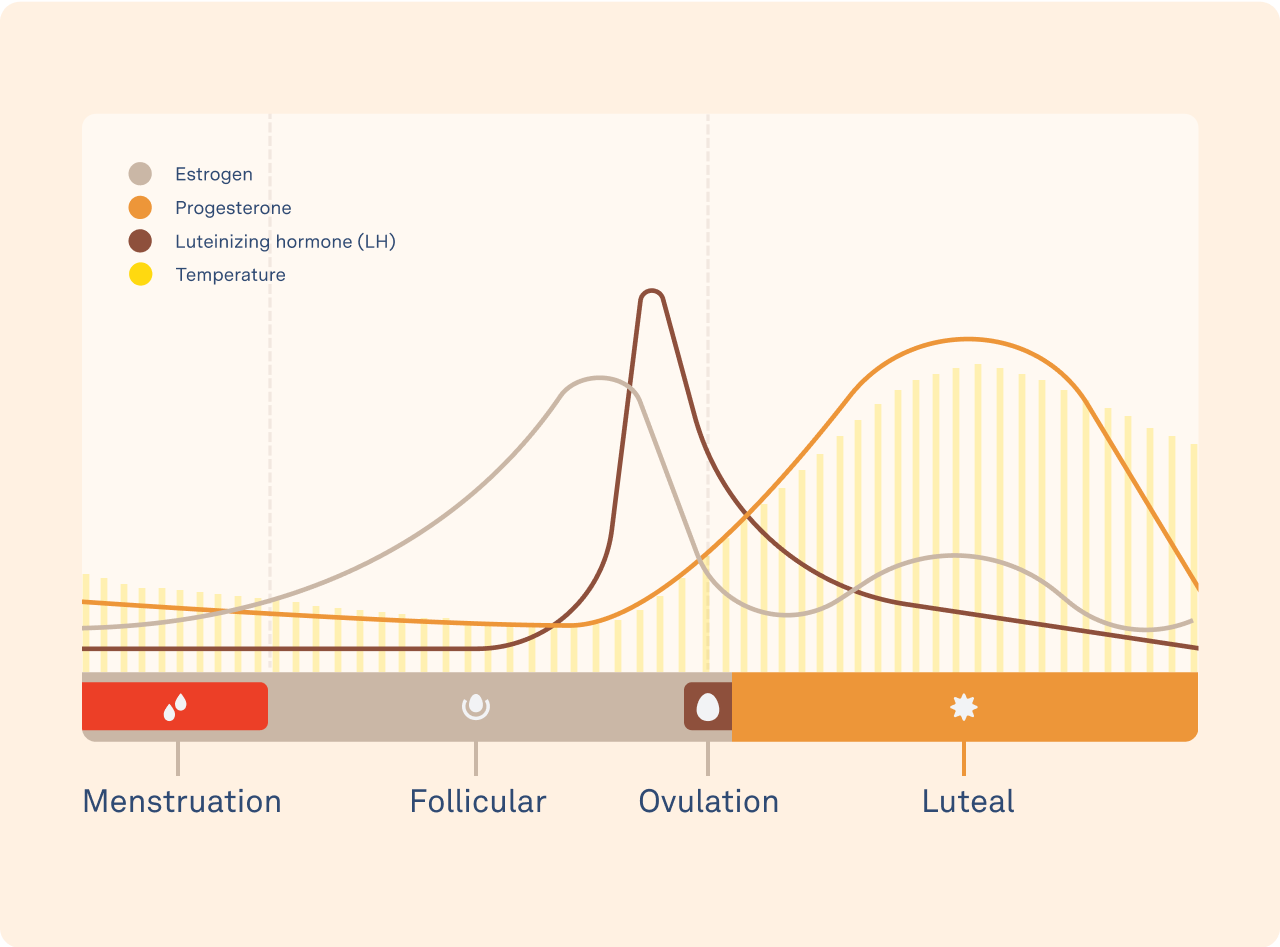
The menstrual cycle has two main phases: the follicular phase and the luteal phase. The phases are characterized by hormonal
changes that affect your body temperature in different ways. These variations are relatively small—roughly 0.3°C to 0.7°C (or 0.4°F to 1°F). Individual variations exist, and not everyone experiences significant changes in body temperature during their menstrual cycle.
Certain medical conditions or medications can influence body temperature, so it’s important to discuss any concerns about temperature changes with your healthcare provider. Being sick can also affect your temperature trends, since your body’s response to illness may raise your temperature above your usual range.
Additionally, hormonal birth control can change your temperature patterns, since many methods suppress the natural hormone
shifts that create the rise and fall in temperature across your cycle. You can use the Hormonal Birth Control in Cycle Insights feature to select your method, whether it’s the pill, patch, IUD, or implant, and Oura will pair it with your biometric data to give context on how your contraception’s hormones may show up in your metrics.
The Follicular Phase
Your follicular phase includes menstruation and ovulation. It begins on the first day of your period, when the uterine lining sheds. A day or two before menstruation starts, your estrogen and progesterone levels drop, causing your body temperature to lower. Ovulation is around the midpoint of the cycle, during which a surge of luteinizing hormone (LH) triggers the release of the mature egg from the ovary.
The Luteal Phase
The luteal phase begins after ovulation when the empty follicle becomes the corpus luteum and produces progesterone. This prepares the lining for a possible pregnancy and slightly raises your body temperature. If the egg isn’t fertilized, the corpus luteum breaks down after about two weeks, hormone levels fall, and your body temperature drops around the time your next period begins.
RELATED: How Oura Data Can Help You Understand Your Menstrual Cycle
How Do You Track Your Menstrual Cycle With Oura?
Using biomarkers like body temperature trends, Cycle Insights will show you which phase of the menstrual cycle you’re in. You’ll also receive daily insights on how your cycle impacts your entire body. Cycle Stats show your typical cycle length, cycle variability, and period length. These are each based on the medians of the cycles you’ve logged over the past six months.
READ MORE: Oura Cycle Insights
5 Ways to Support Your Hormonal Health
Women’s bodies are highly sensitive to lifestyle and environmental factors that can affect their hormonal balance. Use these tips to support your hormones and promote a healthy menstrual cycle.
1. Make Sure You Get Enough Sleep
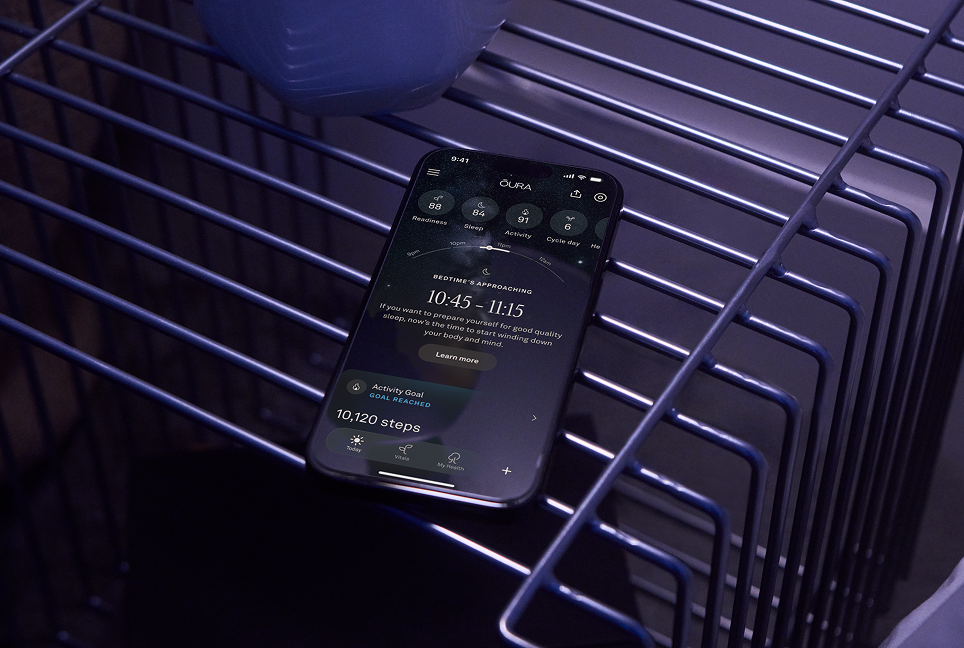
Getting the right amount of quality sleep is essential for healthy hormones. Use Oura’s personalized bedtime recommendations and your chronotype to manage your nighttime routine, and aim to go to bed and wake up at the same time each day.
READ MORE: How This Oura Member Learned to Embrace Her “Evening” Chronotype and Align to Her Ideal Schedule
| Member Tip: Use your Sleep Score and Sleep Graph to regularly assess the quality of your sleep. For instance, if you notice you’re not getting enough deep sleep, you might want to try going to bed earlier or drinking less caffeine during the day. |
2. Track Your Temperature
Keep an eye on your basal body temperature throughout your menstrual cycle using Temperature Trends in your Oura App. This can help you identify patterns and fluctuations in your temperature that can provide clues about your hormonal levels.
3. Manage Your Stress Levels
Stress can impact hormonal balance and affect your menstrual cycle. Practicing stress-reduction techniques, such as meditation, yoga, or deep breathing exercises, may help reduce stress and stabilize your hormones. Your HRV can also tell you a lot about your stress levels. If you notice your HRV is lower than usual, it could be an indicator of stress.
In the Oura App, the Stress Management hub in the My Health tab brings together three views:
- Daytime Stress shows how your body responds to stress in real time throughout the day.
- Resilience reflects how well you’re balancing stress with recovery over recent weeks.
- Cumulative Stress looks at the past month of data to show whether longer-term physiological stress is building up or easing.
| Member Tip: Find the Stress Management hub by tapping My Health, then Stress Management. If you notice you’re often in a stressed state, head to Explore content in your Oura App for breathing exercises and guided meditations that can help you relax. You can also add a Tag from the Daytime Stress screen to see what’s behind your stress spikes. |
RELATED: Oura Member Story: Manage Stress and Understand Reproductive Health
4. Incorporate Healthy Habits
A healthy lifestyle can support hormonal balance and overall well-being, so try to prioritize a balanced diet, regular exercise, and sufficient sleep.
READ MORE: 8 Foods and Drinks for Better Sleep (And the Four to Avoid!)
5. Rule Out Medical Conditions
If you notice drastic temperature changes outside your normal range, it may indicate a medical condition, such as an infection, hormonal imbalance, or thyroid disorder. Your healthcare provider can perform the necessary tests to rule out any underlying health problems.
READ MORE: Member Gabrielle B. Turns to Oura to Manage Her Reproductive and Mental Health
Frequently Asked Questions About Temperature Changes During Menstrual Cycle
Does Oura track my temperature automatically?
Yes, Oura measures your skin temperature continuously overnight while you sleep. Traditional basal body temperature tracking asks you to use an oral thermometer at the same time each morning before getting out of bed. Oura instead takes hundreds of readings across the night and compares them against your personal baseline, so one restless night doesn’t heavily affect your trend.
How does a wearable like Oura track and interpret body temperature data?
Oura measures your skin temperature from your finger while you sleep and compares each night with your individual baseline. Deviations in temperature affect the Body Temperature contributor in your Readiness Score and help Oura spot patterns over time, such as the shifts that come with your menstrual cycle, or signs that your body may be under strain.
How can I use a smart ring for menstrual cycle tracking?
A smart ring can track your cycle through the body signals your hormones influence, like temperature. After ovulation, progesterone raises your temperature slightly, and it stays elevated until your period starts. Oura picks up that shift as a trend across several nights. Cycle Insights uses it to identify which phase of your cycle you’re in and estimate when your next period will start. You can also add Tags for symptoms like cramps or fatigue to see how they line up with your cycle.