







If you’re constantly tired—even when you think you’re getting enough sleep—your body may still be catching up on rest it missed over the past couple of weeks. Those missed hours add up over time into what’s known as sleep debt: the gap between the sleep you need and the sleep you actually get.
In the Oura App, the Sleep Debt feature shows how much sleep you may be missing, based on your estimated personal sleep need over the past two weeks. It can help you recognize when your body needs more rest, and how small, consistent changes can support your recovery.
How Does Sleep Debt Work?
Sleep debt is a matter of simple math. If the recommendation for healthy adults is seven to nine hours of sleep per night, but you only get four to six, that creates a sleep debt of one to three hours per night. In other words, just like financial debt, sleep debt also adds up over time.
Sleep debt also depends on your individual “optimal” sleep duration, which varies not only person by person, but also for yourself depending on factors such as workload, stress, physical activity, or seasonality, explains Raphael Vallat, PhD, staff machine learning scientist at Oura.
Why Am I Tired After 8 Hours of Sleep?
If you slept a solid eight hours and still woke up drained, it usually comes down to one of two things.
First, sleep debt is cumulative. One good night doesn’t make up for what you’ve been missing over the past two weeks—your body is still carrying the shortfall from earlier nights. A single deposit doesn’t clear an overdrawn account.
Second, eight hours might not be your number. Sleep need is personal: some people feel restored in seven hours, others need closer to nine. If your body needs 8.5 hours and you’re getting 8, that small nightly gap can add up. (Sleep quality plays a role too; fragmented sleep isn’t as restorative as solid sleep.)
This is exactly what Sleep Debt in the Oura App is built to show: it compares your actual sleep to your own estimated sleep need over two weeks, so you can see whether last night was enough for you.
RELATED: Why Do I Wake Up Tired?
How Much Sleep Debt Is Too Much?
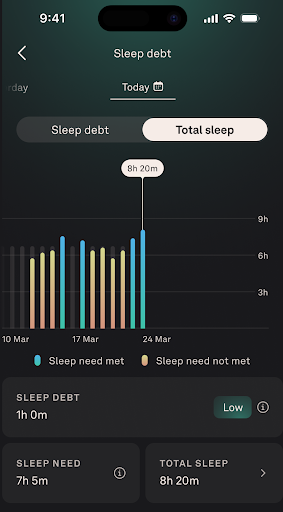
Sleep Debt is measured in hours and minutes and grouped into four categories:
- None (0 hours): You’ve met your sleep need consistently, which has kept you free of sleep debt. Nice work—your body and mind will thank you for it
- Low (<2 hours): You’re mostly meeting your sleep need, though there have been a few days when your total sleep has been a bit low. While low sleep debt might not have a big impact right away, staying consistent can help your body recharge more fully
- Moderate (2–5 hours): You’ve built up a moderate amount of sleep debt recently, likely from getting a bit less sleep than usual. Returning to a more consistent sleep pattern—whatever that looks like for you—can help you feel more recharged
- High (>5 hours): Your sleep debt is high right now, which can make it harder to feel your best. If you’re able to, try to make more room for sleep in the days ahead—giving your body time to recover can really make a difference
How Much Sleep Do You Need?
While most adults need around 7 to 9 hours of sleep, the ideal amount varies from person to person. Factors like age, chronotype, activity level, and recovery needs all play a role.
Your body may need more sleep on some days, especially after physical exertion, stress, or disrupted sleep. Other times, feeling alert and well-rested might take less.
In the Oura App, your daily sleep need is derived from your 90-day sleep history. Even though drawing an accurate, individualized sleep need is a complex scientific challenge, our approach uses your unique data to bridge that gap. It filters out unusually short or long nights to estimate a balanced, personalized baseline. You’ll see this as a specific number of hours and minutes under Sleep Health.
RELATED: How Your Sleep Needs Change Throughout Your Life
What Happens When You Don’t Get Enough Sleep?
As the hours of lost sleep multiply, so do the impacts on your health and well-being. Studies show that chronically short sleep duration can result in daytime sleepiness and tank your performance at work. Plus, you might be grouchier: In a study from 2020, people who had five days of sleep debt saw pleasant pictures in a more negative light.
Short nightly sleep can upset the balance of hormones that control your appetite, making you hungrier. And it can even make you sick: When you sleep 6 or fewer hours per night, your immune system is weakened, so you’re more likely to catch a cold than someone who’s well rested.
The long-term consequences are even worse: Without proper sleep quantity, your risk of cardiovascular disease and events like stroke and heart attack increases. Risks of diabetes and obesity also rise, as does the risk of early death.
READ MORE: How Sleep Affects Your Immune System
Can You Catch Up on Sleep? 5 Ways to Recover from Sleep Debt

Trying to catch up on a sleep debt you’ve been building for months in one weekend is like cramming for an exam or crash dieting: You might see some results, but you’re better off creating new, healthy habits. Instead, turn to these strategies to establish a healthier sleep routine.
1. Take a (quick) nap.
If you’ve accumulated an hour or two of sleep debt the night before, a brief nap can help pay it off (if you can swing it). Even a 10-minute nap can result in immediate improvements in cognitive performance and reduce fatigue, while 20-minute naps have been shown to improve physical endurance and reduce perceived exertion.
READ MORE: How Long Should You Nap?
2. Maintain a consistent sleep schedule.
Do your best to go to bed and wake up at the same time every day—yes, even on weekends. This can help keep your circadian rhythm in check, so you’re able to fall asleep and wake up more easily.
LEARN MORE: Circadian Rhythms and Your Bedtime
3. Use Oura Tags.
With Oura Tags, you can make notes of your meals and other behaviors, such as workouts, hard days at work, or having a cold, to see how they correlate to sleep.
You might notice that on days when you have caffeine after a certain time, your sleep suffers. Or when you eat later, you don’t feel as rested. All this information will help you improve your rest each night so that you can get out of the sleep debt cycle.
4. Sleep in a super-dark environment.
Blue light (the kind produced by your phone screen) is the same color as daylight, and it messes with your brain’s sleep signals. Instead of increasing the amount of melatonin being produced in your brain, which tells your body to go to sleep, blue light suppresses the release of this hormone. When you don’t have enough melatonin, you won’t be able to sleep.
READ MORE: Everything You Need to Know About Melatonin
5. Wake up earlier, instead of staying up later.
If you must cut into your sleep time to do extra work (or squeeze in “me” time), trade late nights for early mornings. Doing so will allow you to go through all the important stages of sleep, and make it easier to fall asleep the next night, too, since you’re likely to be tired and ready for a restful night’s sleep.
RELATED: 8 Ways to Get More Deep Sleep
Frequently Asked Questions About Sleep Debt
Can you catch up on sleep?
To a point. You can recover from recent sleep debt with a few consistent nights, or a short nap, but you can’t erase months of lost sleep in one weekend.
How long does it take to recover from sleep debt?
It depends on how much you’ve built up. A small, recent deficit can clear in a few nights of meeting your sleep needs; chronic, long-term debt takes weeks of consistency. Watch your Sleep Debt trend rather than any single night.
How much sleep debt is too much?
In the Oura App, under two hours is low, two to five is moderate, and over five hours is high — a sign your body may not have fully recovered, and worth prioritizing rest.
How can I track my naps and see how they affect my overall energy?
You can use Oura to track your naps. A short nap can chip away at recent sleep debt. Even 10–20 minutes boosts alertness; just keep it early and brief so it doesn’t disrupt that night’s sleep.
Can your circadian rhythm affect your sleep debt?
Yes. When your schedule is irregular, such as late nights, shifting bedtimes, or weekend lie-ins, your circadian rhythm falls out of sync. That lost sleep adds to your debt. Keeping consistent sleep and wake times steadies your rhythm and helps keep debt from building.