

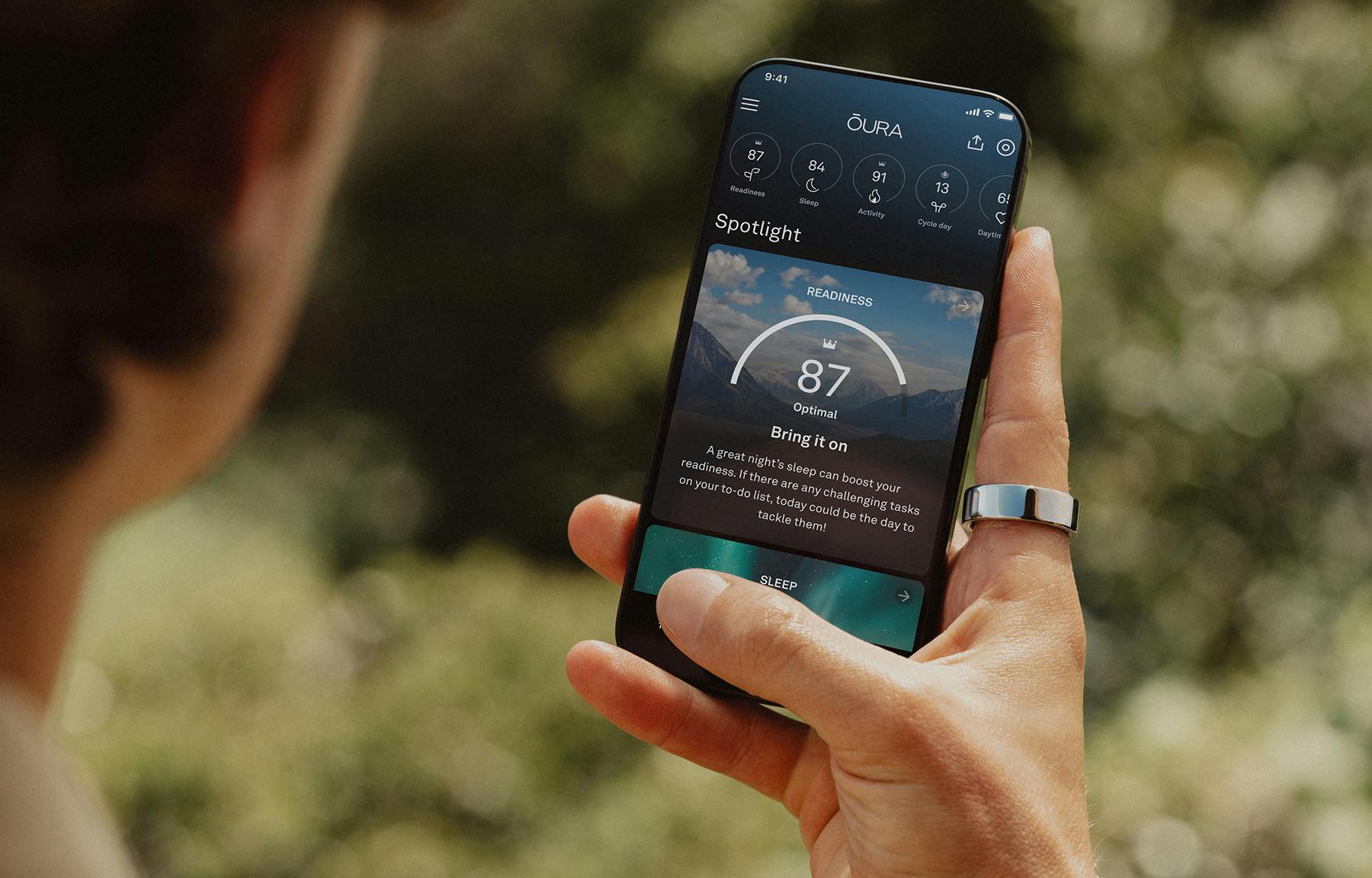




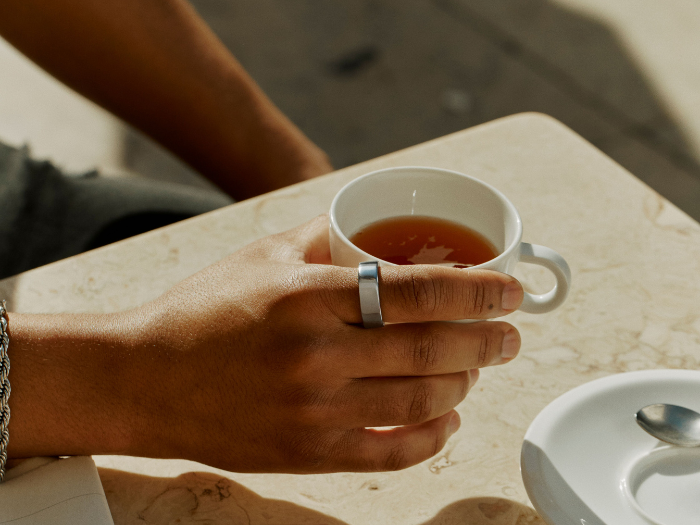
Oura’s Readiness Score is designed to help you discover what works for your body and lifestyle. Your Readiness Score is one of three personalized Oura Scores that help you answer different questions about your health:
- Your Readiness Score: How ready are you for the day?
- Your Sleep Score: How well did you sleep last night?
- Your Activity Score: How are you balancing your activity, inactivity, and rest?
Readiness is a holistic picture of your health, taking into account your recent activity, sleep patterns, and direct body signals (like resting heart rate, heart rate variability, and body temperature) that can signify if your body is under strain. Your Readiness Score also influences your Resilience level.
Readiness Score Ranges
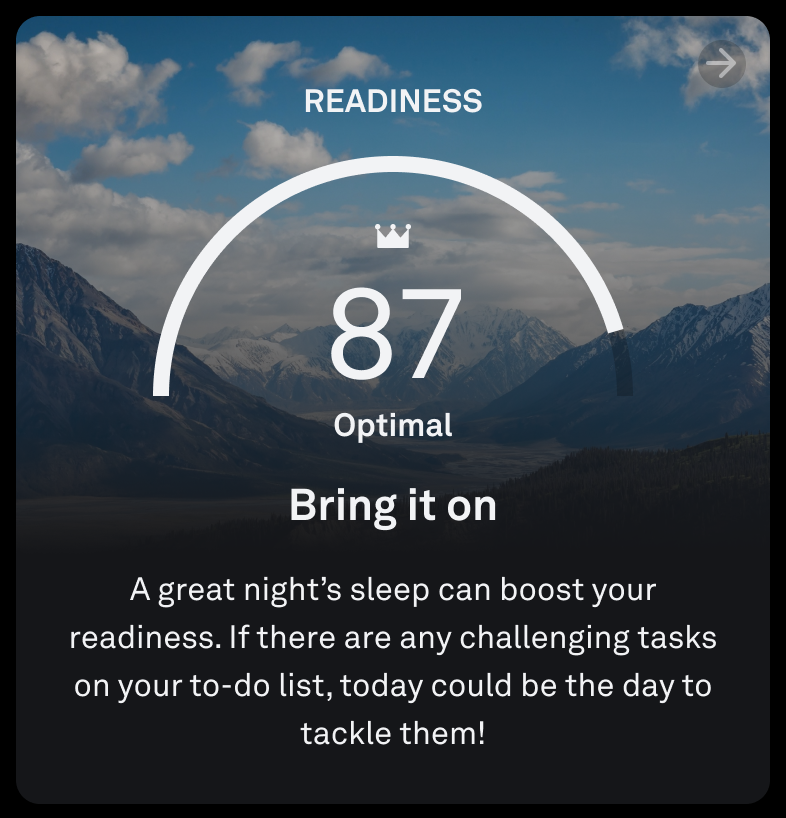
Your Readiness Score ranges from 0-100 and tells you, at a glance, if you are ready to face greater challenges or if you need some recovery and rest:
- 85 or higher: Optimal, you’re ready for action!
- 70-84: Good, you’ve recovered well enough.
- Under 70: Pay attention, you’re not fully recovered.
READ MORE: How Oura Measures Readiness
Oura’s Core Scores: How Readiness Works Alongside Sleep, Activity, and Stress
| Metric | What it measures | Use |
| Readiness Score | Daily capacity for activity and other demands | Decide whether to train, maintain normal activity, or prioritize recovery |
| Sleep Score | The quality and balance of recent sleep | Review sleep quality and identify sleep-related contributors |
| Activity Score | Movement, inactivity, rest, and activity balance | Adjust movement, training volume, and rest |
| Daytime Stress | Physiological stress and recovery during waking hours | Notice stress patterns and recovery opportunities during the day |
| Resilience | The balance between physiological stress and recovery | Track how well the body is adapting over time |
What Are the Readiness Contributors?
The sum of these daily Readiness Contributors make up your Readiness Score. Your contributors answer deeper questions about how your body is responding to your lifestyle in three core pillars: sleep, activity, and body stress.
Although you have unique Sleep and Activity Scores, your sleeping and activity levels play a strong role in your daily body status. To account for that, you have dedicated contributors that account for both your short and long-term sleep and activity levels.
Three of your Readiness Contributors account for your sleep and help you answer, “How is my sleep impacting my Readiness?”
- Sleep: “How well did I sleep last night compared to normal?”
- Sleep Balance: “Have I been getting enough sleep in the last 2 weeks?”
- Sleep Regularity: “What was the consistency of my bedtime and wake time over the last 2 weeks?”
Two of your Readiness contributors account for your activity and help you answer: “How are my activity patterns impacting my Readiness?”
- Previous Day Activity: “Did I balance my activity, inactivity, and rest yesterday?”
- Activity Balance: “How much load is my body under from my recent activity levels?”
Your remaining contributors are all dedicated to identifying signs of body stress and help you answer “Are there signs that my body needs recovery or that I may be getting sick?”
- Resting Heart Rate: “Was my RHR substantially higher or lower than usual?”
- HRV Balance: “How has my HRV changed over the past few weeks?”
- Body Temperature: “Is my body temperature higher or substantially lower than usual?”
- Recovery Index: “After my heart rate reached its baseline last night, how many hours of recovery sleep did I get?”
These contributors are entirely personal and are designed to help you spot signs of strain from stress, illness, injury, or another shift in your health before you even feel anything in some cases. If your temperature is elevated, Oura will automatically alert you and give you the option to turn on Rest Mode to help you care for yourself.
Keep in mind that your Readiness Score places a unique emphasis on how your health is trending over time. While many wearables focus on today or last night, Oura believes that health is a journey for long-term balance and supports that exploration with long-term contributors: Sleep Balance, Activity Balance, and HRV Balance.
READ MORE: How Oura Members’ Readiness Scores Change Throughout The Week
 More Readiness Tools
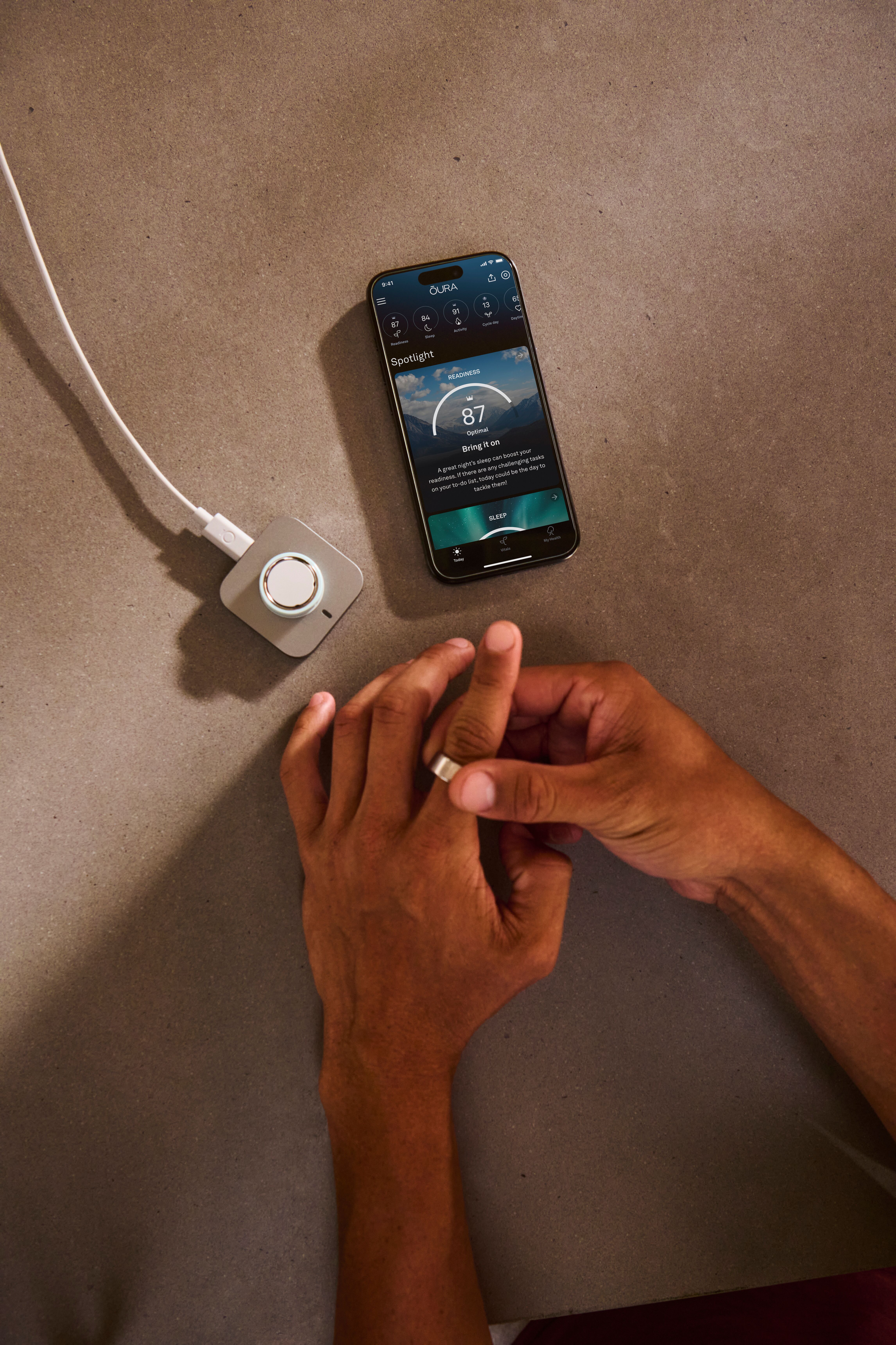
Beyond your Scores and Contributors, Oura provides more tools to investigate how ready your body is each day.
- Resting Heart Rate (RHR) is the number of times your heart beats per minute while at rest. A below-average resting heart rate is a signal of recovery.
- Heart Rate Variability (HRV) is an indicator of the variation between your heartbeats and is an indicator of your stress levels, recovery status, and general well-being. Read more.
- Body Temperature is the change in your nighttime skin temperature from your average which can act as an early signal of illness or hormonal fluctuations. Read more.
- Respiratory Rate is the number of breaths you take per minute while asleep. Respiratory rates may increase with illness or stress.
Additionally, Oura provides your entire night of HRV data and empowers you to look for recovery patterns in your nighttime heart rate graph.
What Can Lower Your Readiness Score?
A few common factors can affect your Readiness contributors and lower your overall score. Among the most common are illness, irregular sleep (which may be caused or affected by things like jet lag), alcohol, and stress. These are often just part of life. The goal isn’t a perfect Readiness Score every day; it’s to learn how your lifestyle shapes your energy and health over time.
How To Improve Your Readiness Score
If you’re looking for ways to improve your Readiness Score, keep these principles in mind:
- Contributors where you receive a “pay attention” message with a red progress bar are areas for potential improvement.
- A Readiness Score of 85 or above is optimal. 100s are designed to be rare rather than regular.
- If an illness, injury, or lifestyle need prevents you from meeting your activity goals, you can temporarily mute your Activity Score & Contributors with Rest Mode.
As you’re exploring which Readiness Contributors you can improve, it helps to consider which questions they help you answer.
If your sleep contributors are in the red, try exploring whether it’s your short-term (Sleep) or long-term (Sleep Balance) contributors that need improvement. To improve these contributors, keep these tips in mind:
- Sleep: The quality of your previous night’s sleep significantly impacts your next day’s mental and physical performance. A Sleep Score above 85 will boost your Readiness Score. Try these tips for improving your sleep score.
- Sleep Balance: This contributor is a measure of your sleep debt. It analyzes whether your sleep over the past two weeks is in balance with your body’s needs and how much sleep you tend to get. To improve, aim for multiple nights of consistently good sleep when you can rather than “making up for lost sleep” on weekends or holidays.
If your activity contributors are in the red, try exploring whether your short-term (Previous Day Activity) or long-term (Activity Balance) contributors need improvement. To improve these contributors, keep these tips in mind:
- Previous Day Activity: Being unusually inactive or active the day before lowers your Readiness Score. If you’re struggling to stay active, check out these tips for improving your Activity Score. If you’re seeing your score dip because of high activity, keep in mind that Readiness signals a capacity that is meant to be used to achieve your goals. High levels of activity can be good for your health but may result in a temporary Readiness dip as your body rebounds. Find what works for you.
- Activity Balance: This measures how activity levels over the past 2 weeks may be affecting your readiness. For maximum performance, aim to maintain a good balance with your low, medium, and high-intensity activities. Your activity balance can drop temporarily during a peak training phase, but it should bounce back to normal as you recover. Staying in balance will boost your readiness and help you stay productive and healthy.
If your body’s stress contributors are in the red, your body may need rest and recovery. Oftentimes, these contributors are less about improving or aiming to hit a certain benchmark and more about being in touch with what your body needs. These insights may help:
- HRV Balance: This contributor compares your recent HRV to your long-term average. While individual days may be lower after high-intensity exercise, a night out, or a stressful day, if your HRV balance is on par with or better than your average, it’s a sign of good recovery. Read more.
- Body Temperature: Body temperature readings significantly above or below your normal range will lower your score. You can read more about how the Oura Community has used this to monitor for illness or to spot changes in pregnancy status and menstrual cycle phases.
- Recovery Index: This contributor captures how long it takes for your resting heart rate to stabilize during the night. If your resting heart rate approaches its lowest point during the first half of the night, this can be a good sign for recovery. If your heart rate remains high, try looking at what might be keeping it up – late meals, caffeine, exercise, stress or stimulation may be the culprit.
- Resting Heart Rate: Oura interprets a resting heart rate on par with your average as a sign that your mind and body are recovering well during sleep. An overly high or low resting heart rate may mean you’re overly stressed and not getting enough rest, or perhaps your immune system is fighting something. If your heart rate remains high, try looking at what might be keeping it up – late meals, caffeine, exercise, stress or stimulation may be the culprit.
RELATED: Your Oura Sleep Score
FAQ About Readiness
How do I get a daily score that summarizes how ready my body is for the day?
Oura’s Readiness Score is a daily 0–100 score that combines your recent sleep, recent activity, and direct body signals—resting heart rate, heart rate variability, and body temperature—into one number. 85 or higher means you’re ready for action, 70–84 means you’ve recovered well enough, and below 70 is a sign to pay attention.
Is Readiness the same as strain?
No, they are different. Readiness estimates how prepared your body appears for the day ahead. Strain describes how much physical exertion and stress your body is absorbing. Readiness is the fuller picture; you can use it alongside Daytime Stress, Activity Impact, and Cumulative Stress.
How can I see the impact of my lifestyle choices on my body?
You can add Tags in the Oura App to log the things you want to see the impact of lifestyle habits, such as an evening coffee, a hard training session, or a glass of wine. Then check how your scores respond over the following days. Your long-term contributors (Sleep Balance, Activity Balance, HRV Balance) show patterns, not one-off days.
Which wearable is best for someone who wants simple, at-a-glance health scores?
If you want your health summarized in clear daily scores, a smart ring like Oura is a strong fit. Instead of making you sort through dozens of metrics, Oura gives you three daily scores from 0 to 100: Readiness, Sleep, and Activity. Your Readiness Score combines signals like your resting heart rate, heart rate variability (HRV), body temperature, and recent sleep and activity into one number that reflects how prepared your body is for the day ahead.
What is a “good” readiness score?
A good readiness score can depend on your personal baseline and needs; 70-84 means you’ve recovered well enough. 85 or higher is optimal and means you’re ready for action!