



VO2 max is the maximum amount of oxygen your body can use during intense exercise, measured in milliliters per kilogram per minute (ml/kg/min). Cardiorespiratory fitness, as measured by maximal oxygen uptake (VO2 max), is a strong and independent predictor of all-cause and disease-specific mortality.
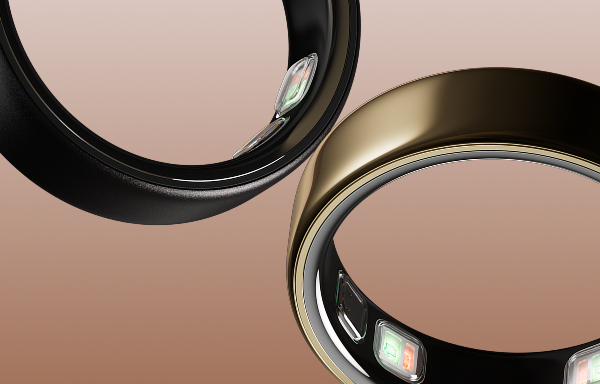
As part of Oura’s Heart Health features, automatic VO2 Max (currently available in Oura Labs) estimates your maximum oxygen uptake passively through your regular GPS-enabled workouts.
Along with Cardiovascular Age and other Oura data and insights, this feature provides a window into the status of your entire cardiovascular system and holistic, long-term health.
| Member Tip: Automatic VO2 Max activates after you complete five qualifying GPS-enabled activities, including walks, runs, and hikes. Once calibrated, you can open the My Health Heart Hub to view. |
LEARN MORE: VO2 Max Support Center
What Is VO2 Max?
When you engage in intense physical activity (think: running), a series of physiological responses occur. First, your heart rate increases, which pumps more blood to your muscles, delivering oxygen and nutrients necessary for energy production. Your blood vessels dilate to enhance blood flow, while your heart’s left ventricle stretches larger to allow each beat to deliver a bigger bolus of blood.
As your muscles start to work harder, you also start breathing harder to take in more oxygen and eliminate carbon dioxide. Oxygen passes through the lungs to the blood, binding to hemoglobin and reaching the working muscles, where it is used to make adenosine triphosphate (ATP)—energy (or fuel) for your muscles.
Your VO2 max is determined by how efficiently your body performs this coordinated effort between the heart, blood, vasculature, muscles, and lungs.
The greater your VO2 max, the greater your body’s ability to supply oxygen to your muscles during physical activity. “Conversely, with a lower VO2 max, your heart rate has to increase to move the oxygen through various organ systems,” explains Pauli Ohukainen, PhD, Senior Research Scientist at Oura.
How Is VO2 Max Measured?
There are two main tests typically used to measure a person’s VO2 max.
The Maximal Exercise Test, the Gold Standard

The maximal exercise test is considered the most accurate testing method as it directly measures the amount of oxygen the body is able to use during intense effort.
However, due to the equipment and personnel involved, this type of testing tends to be costly and time-intensive. It’s also not suitable for all populations, such as older adults or those with preexisting health conditions, as it requires an intense physical effort.
In the test, a person (usually exercising on a treadmill or cycle ergometer) wears a mask or mouthpiece connected to a metabolic cart, which measures the amount of oxygen consumed and carbon dioxide produced during breathing. The test begins at a relatively easy level, and then the exercise intensity level increases until the subject is pushed to their maximal effort.
VO2 max is then calculated based on the highest rate of oxygen consumption measured during the test. The result is usually given in milliliters of oxygen used per minute per kilogram of body weight (ml/kg/min).
The Submaximal VO2 Max Test
A less costly and more accessible VO2 max test is a submaximal test.
A submaximal test involves a person exercising at a lower intensity level, such as walking briskly. In submaximal tests, a person’s heart rate responses to graded exercise sessions are compared to standard tables or equations to estimate the maximum oxygen uptake.
A relatively low resting heart rate that quickly returns to baseline after exertion signifies a higher VO2 max, while a relatively high resting heart rate that stays elevated after exertion signifies a lower VO2 max.
“This test is easier to interpret, doesn’t have the same practical limitations as formal VO2 max testing, and doesn’t carry the same risks,” notes Marco Altini, PhD, an Oura data science advisor and movement expert.
How Oura Estimates Your VO2 Max

As with Cardiovascular Age, Oura provides an estimate of your VO2 max based on research-backed methods. Though not as accurate as the lab-based maximal test, Oura’s VO2 max feature provides a broad estimate of your current cardiorespiratory health. You can utilize this information to inform your current cardiorespiratory fitness and track how it changes over time.
Available in Oura Labs for Oura Ring Gen3 and later, automatic VO2 Max activates after you complete five qualifying GPS-enabled activities, including walks, runs, and hikes. Once calibrated, you can open the My Health Heart Hub to view:
- Your Current Estimate: Expressed in ml/kg/min.
- Your Fitness Category: Clear context rating your capacity as Low, Fair, High, or Peak.
- Longitudinal Trends: A clear visual of how your aerobic capacity changes over time and when it was last updated.
- Personalized Insights: Contextual notifications whenever your VO2 Max meaningfully shifts or stays consistent.
Oura’s VO2 max classifications are based on the research-backed reference values for women and men, shown in the charts below.
Women:
| Age | Low | Fair | High | Peak |
| <=24 | <32 | 32-39 | 40-46 | >46 |
| 25-29 | <31 | 31-38 | 39-44 | >44 |
| 30-34 | <30 | 30-35 | 36-42 | >42 |
| 35-39 | <28 | 28-33 | 34-40 | >40 |
| 40-44 | <26 | 26-31 | 32-37 | >37 |
| 45-49 | <24 | 24-29 | 30-35 | >35 |
| 50-54 | <23 | 23-27 | 28-32 | >32 |
| 55-59 | <21 | 21-25 | 26-30 | >30 |
| 60-64 | <19 | 19-22 | 23-27 | >27 |
| 65-69 | <18 | 18-20 | 21-25 | >25 |
| 70-74 | <16 | 16-18 | 19-22 | >22 |
| 75+ | <14 | 14-16 | 17-20 | >20 |
Men:
| Age | Low | Fair | High | Peak |
| <=24 | <38 | 38-46 | 47-56 | >56 |
| 25-29 | <36 | 36-45 | 46-53 | >53 |
| 30-34 | <35 | 35-42 | 43-51 | >51 |
| 35-39 | <33 | 33-40 | 41-48 | >48 |
| 40-44 | <32 | 32-38 | 39-46 | >46 |
| 45-49 | <30 | 30-36 | 37-43 | >43 |
| 50-54 | <28 | 28-34 | 35-41 | >41 |
| 55-59 | <27 | 27-32 | 33-39 | >39 |
| 60-64 | <25 | 25-30 | 31-36 | >36 |
| 65-69 | <23 | 23-28 | 29-34 | >34 |
| 70-74 | <21 | 21-26 | 27-31 | >31 |
| 75+ | <20 | 20-24 | 25-29 | >29 |
Why Your VO2 Max Matters for Longevity and Heart Health
“Cardiorespiratory fitness is one of the most important determinants of health and well-being,” says Altini. “While step count and energy expenditure are important, they mainly reflect behavior rather than health status.”
It reflects the efficiency and health of your heart. Oxygen delivery is essential for numerous physiological processes, including energy production, brain function, and muscle function. All in all, the more efficiently you can consume and use oxygen, the better.
Research shows that VO2 max is associated with other significant health outcomes, including longevity, sleep quality, and risk of disease. Cardiorespiratory fitness, as measured by VO2 max, has also been shown to be a key predictor of health and longevity.
A low VO2 max is associated with a greater risk of future cardiovascular disease, reduced mental health, lower sleep quality, and an increased risk of all-cause mortality. Fortunately, there are well-established strategies to increase your VO2 max.
What’s a Good VO2 Max for Athletes?
There’s a reason why athletes closely monitor their VO2 max: “It can provide a proxy for performance and fitness and help you understand if you are getting in better shape,” says Altini.
Studies find that athletes have a higher VO2 max than sedentary peers of the same age and sex. If you train regularly, track the trend rather than chase a single number: steady gains in your VO2 max over weeks and months are a better sign of improving fitness than any one reading. Genetics set part of your ceiling, but consistent training moves you toward it.
Improving VO2 Max
“Nothing benefits the cardiovascular system more than aerobic exercise,” Ohukainen says. “It helps us build a strong heart and flexible arteries and ensures their ability to respond to changing demands.”
VO2 Max responds well to training and lifestyle modifications, no matter your age. For instance, a study found that men and women in their 60s were able to increase their VO2 max after 9 months of endurance training.
Whether you’re new to exercise or you’ve been training for years, staying consistent with exercise is vital to improving VO2 Max. When you exercise regularly, your muscles get better at using oxygen, which helps them work more efficiently. Plus, the more you exercise, the more mitochondria your muscles make — and mitochondria produce ATP, contributing to oxygen consumption and exercise capacity.
READ MORE: How to Improve Your VO2 Max
ŌURA products and services are not medical devices, and are not intended to mitigate, prevent, treat, cure or diagnose any disease or condition. If you have any concerns about your health, please consult your doctor.
Frequently Asked Questions About VO2 Max
Is a higher or lower VO2 max better?
Higher is better. A higher VO2 max means your body can take in and use more oxygen during hard effort, which reflects stronger cardiorespiratory fitness and is linked to better long-term health.
What’s a good VO2 max for my age?
It depends on your age and sex (see the reference ranges above). As a general rule of thumb, landing in the High or Peak range for your group signals strong cardiovascular fitness.
How can I measure my VO2 max at home?
Wear your Oura Ring and use the automatic VO2 Max feature (currently available in Oura Labs) to estimate your maximum oxygen uptake passively through your regular GPS-enabled workouts.
How long does it take to improve your VO2 max?
Most people see measurable gains in about six to eight weeks of consistent training that mixes high-intensity intervals with easy endurance work.
About the Oura Experts
Pauli Ohukainen, PhD, is a Senior Research Scientist at Oura’s Future Physiology Team, where he is responsible for designing and leading clinical cardiometabolic research projects. Ohukainen has an M.Sc in biochemistry and molecular biology. He did his PhD in the department of Pharmacology and Toxicology, University of Oulu, Finland, on the molecular mechanisms of human aortic valve calcification. He has published more than 20 peer-reviewed articles, and has been a PhD supervisor and a lecturer for medical students.
Marco Altini, PhD, is an Oura advisor and has a PhD cum laude in applied machine learning, a M.Sc. cum laude in computer science engineering, and a M.Sc. cum laude in human movement sciences and high-performance coaching. He has published more than 50 papers and patents at the intersection between physiology, health, technology, and human performance.