








After climbing into bed at night and turning off the lights, the last thing you want to do is lie awake, staring into the darkness. If this sounds familiar, you might wonder: How long does it take to fall asleep at night?
The amount of time it takes to fall asleep after going to bed is known as sleep latency. Ideally, you should fall asleep within 10 to 20 minutes of lying down. Falling asleep in less than 5 minutes may be a sign of overtiredness.
READ MORE: How to Fall Asleep Faster
| Member Tip: As a Sleep Score contributor, your sleep latency impacts your Sleep Score if it’s abnormally high or low. If Oura often tells you to “pay attention” to your sleep latency, consider making some lifestyle changes or speak with your healthcare provider. |
Low Sleep Latency: Can You Fall Asleep Too Quickly?
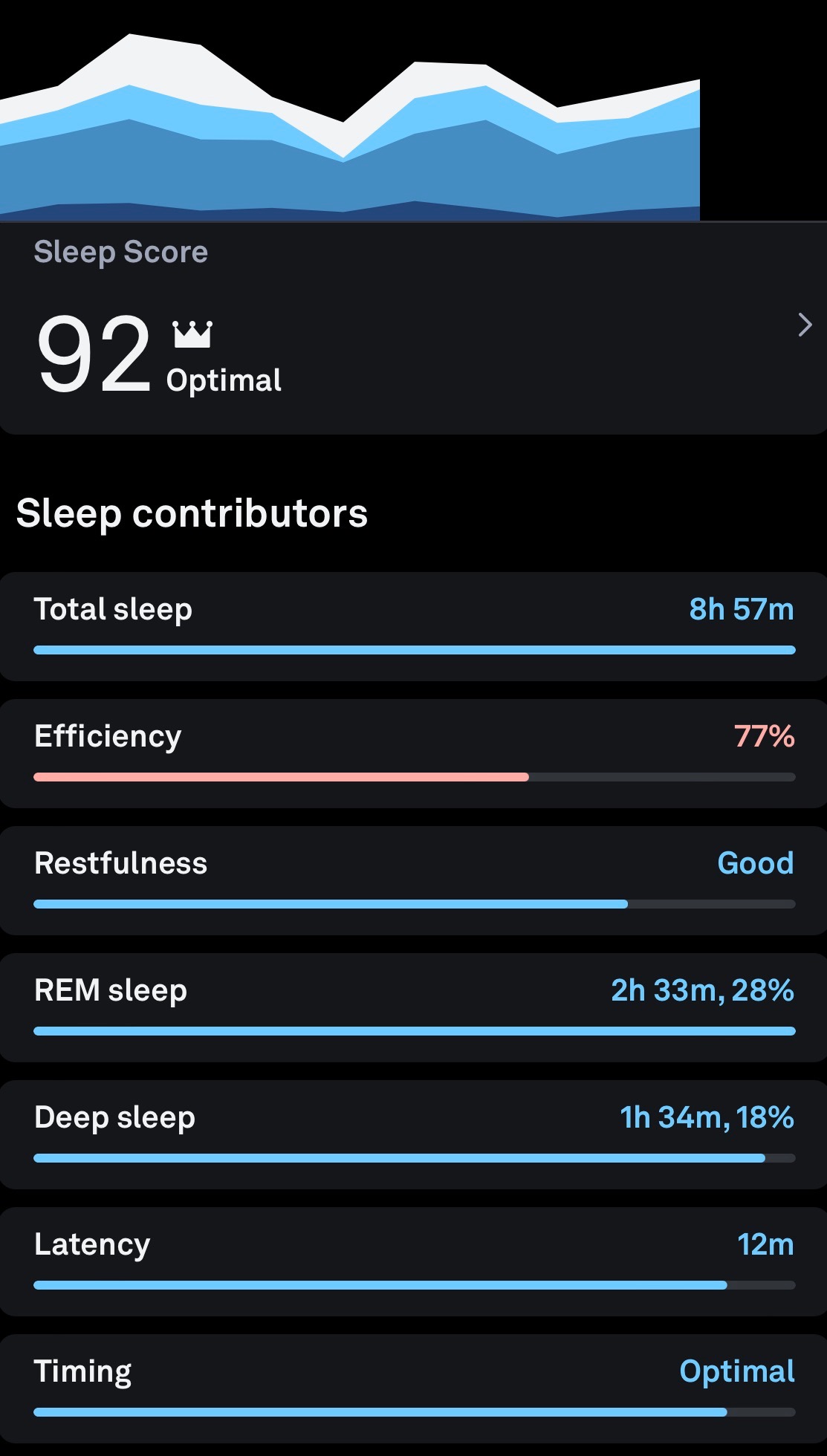
A lower-than-average sleep latency might be normal on occasion. But if it persists for a long period of time, it could be a sign of other sleep problems. These may include:
Sleep Deprivation
When you don’t get enough sleep over a long period of time, you’re sleep-deprived, and your circadian rhythm is disrupted. The longer you stay awake, the more your body craves sleep. So, if you’re sleep-deprived, you’ll likely doze off faster than someone who’s well-rested.
Signs of sleep deprivation include excessive tiredness during the day, irritable moods, needing caffeine or naps to get through the day, or weight gain.
Sleep Debt
Sleep debt is the gap between the hours you actually sleep and the hours your body needs. To settle the score, you’ll need extra snooze time. Lose sleep for a few nights? Plan on a few more nights of solid sleep to square up the sleep debt.
Other Potential Factors
- Excessive alcohol consumption
- Some medications, such as sedating antidepressants
- Certain health issues such as sleep apnea, narcolepsy, or a brain injury
If you notice you regularly fall asleep in under five minutes, take steps to improve your sleep hygiene or consult your doctor if you think it’s a cause for concern.
READ MORE: 5 Ways to Upgrade Your Sleep Hygiene
High Sleep Latency: Why Does It Take So Long to Fall Asleep?
If you’ve tried adjusting your sleep hygiene and are still struggling with sleep latency or poor sleep, there may be other factors at play.
1. Health Conditions
Some physical and mental health conditions can make it hard to fall asleep at night, including:
- Chronic pain
- Heart disease
- Diabetes
- Endometriosis
- Heartburn or acid reflux
- Anxiety
- Depression
2. Sleep Disorders
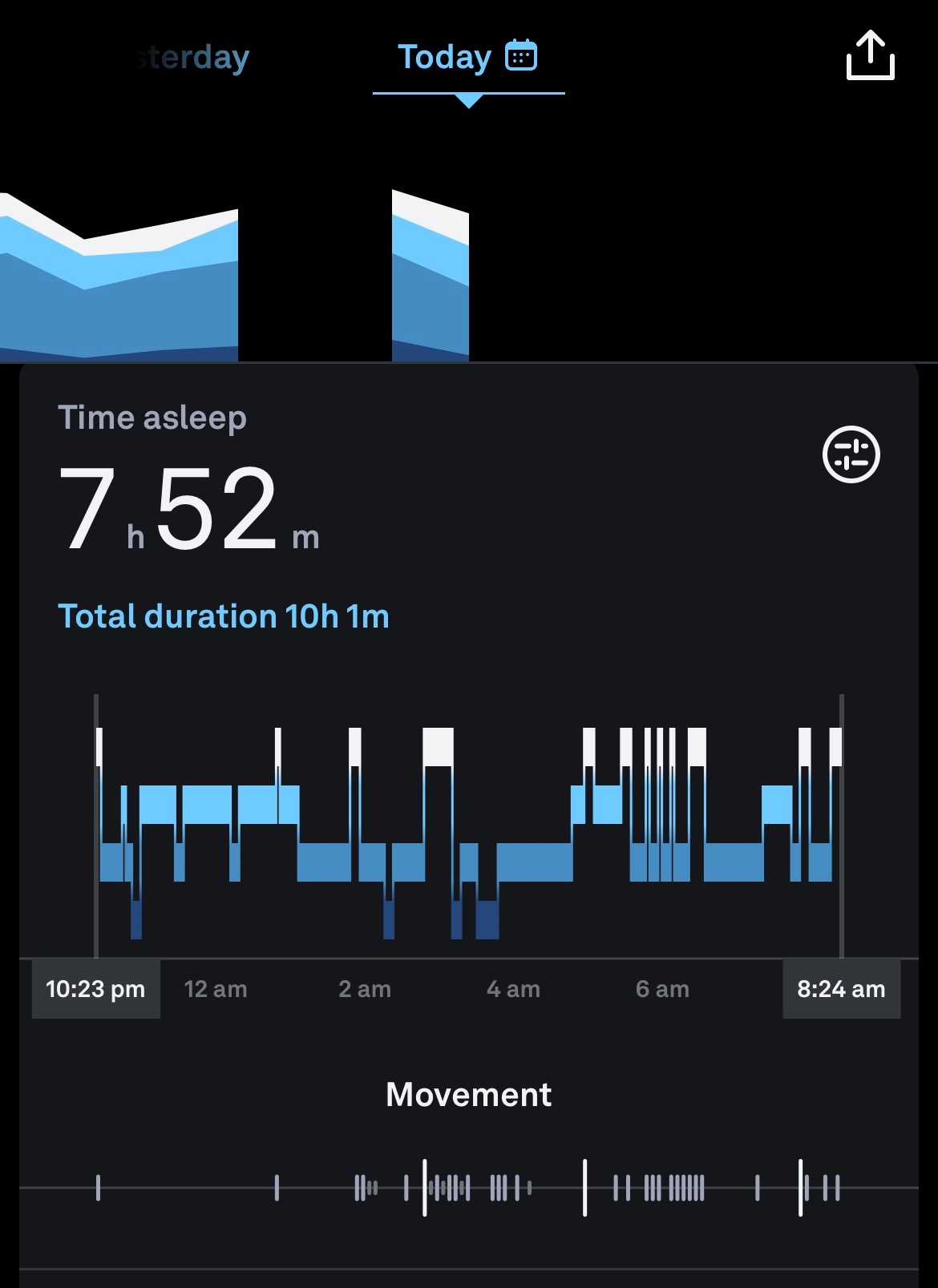
Sleep disorders like insomnia, obstructive sleep apnea, and restless leg syndrome can prevent you from falling asleep easily at night.
For Oura members, their sleep data can provide clues about what might be going on.
For instance, the Nighttime Movement feature can show you whether you experience excessive movement during the night, which could be an indication of restless leg syndrome or periodic limb movement disorder.
If you suspect you have obstructive sleep apnea, consult the Blood Oxygen Sensing (SpO2) feature and your breathing regularity to see whether breathing disturbances might be affecting your sleep.
3. Circadian Rhythm Disruptions
Working night shifts and other irregular sleep schedules can cause disruptions to your circadian rhythm (the internal clock that regulates your wake-sleep cycle) that make it difficult to fall asleep.
Another disruptor is jet lag, which is no longer limited to physical travel across time zones — you can now experience virtual jet lag by staying up too late or waking up too early for a virtual meeting or interview.
Additionally, those who like to stay up late socializing on the weekends may experience social jet lag that makes it harder to get back into a regular sleep routine.
| Member Story: As a pharmacist with a challenging shift-work schedule, Linda D. uses Oura to improve her recovery after her mentally and physically demanding work shifts. |
4. Stress
Stress and sleep are deeply interlinked: a lack of sleep can contribute to stress, while stress can affect your sleep quality in various ways — including your sleep latency. Oura members can use the Daytime Stress feature to learn how stress is affecting them during the day, and what they can do to bring their body into a more relaxed state.
Breathwork exercises, journaling, and light exercise can all help reduce stress, especially before bed.
RELATED: 14 Science-Backed Ways to Wind Down Before Bed
5. Medications
A number of commonly prescribed medications can affect sleep latency, including cold and allergy decongestants, antidepressants, beta-blockers, stimulants, and steroids.
If you think your medication is preventing you from falling asleep, speak to your doctor about alternatives.