








HRV, or heart rate variability, measures the small changes in time between heartbeats. These changes provide insight into the balance of the autonomic nervous system (ANS), which helps the body respond to stress and recover afterward.
A lower HRV than your personal baseline may accompany physical or psychological stress. A higher HRV often reflects better recovery and flexibility in the nervous system. HRV can show patterns linked to stress, but it cannot diagnose anxiety, depression, or another mental-health condition. Through your HRV data in the Oura App, you may notice signs of either acute (short-term) or chronic (long-term) stressors, such as an illness, lifestyle changes, alcohol consumption, or longer-term sources of mental stress.
Understanding HRV and Its Role in Stress
One of the most consistent physical indicators of stress is heart rate variability — or HRV. This biofeedback marker provides insight into the state of your autonomic nervous system, or ANS.
As a general rule of thumb, a higher HRV value reflects relatively low stress levels, while a lower HRV may signal higher stress. However, “high” and “low” are relative terms, as your baseline HRV is as unique as your fingerprint. It can be as low as 20 or as high as 200 milliseconds.
RELATED: What Is the Average HRV of Oura Members?
How the Nervous System Affects HRV
The ANS has two main branches that work together:
| ANS Branch | Main Response | Typical effect on HRV |
| Sympathetic nervous system (SNS) | Activates the fight-or-flight response, increasing heart rate and directing blood flow toward the limbs | HRV often decreases during acute stress |
| Parasympathetic nervous system (PNS) | Activates the rest-and-digest response, slowing the heart and supporting rest and digestion | HRV often increases during recovery and relaxation |
Generally, HRV itself reflects the balance between PNS and SNS, both of which may be activated to varying degrees. Higher HRV is associated with more PNS activity and less SNS activity, while lower HRV is associated with more SNS activity and less PNS activity. While HRV is one signal of this balance, it is not a complete measure of mental or physical health.
A stressful situation can cause a temporary HRV decrease. Once the stressor passes, HRV may return toward its usual range.
Oura’s HRV Measurements
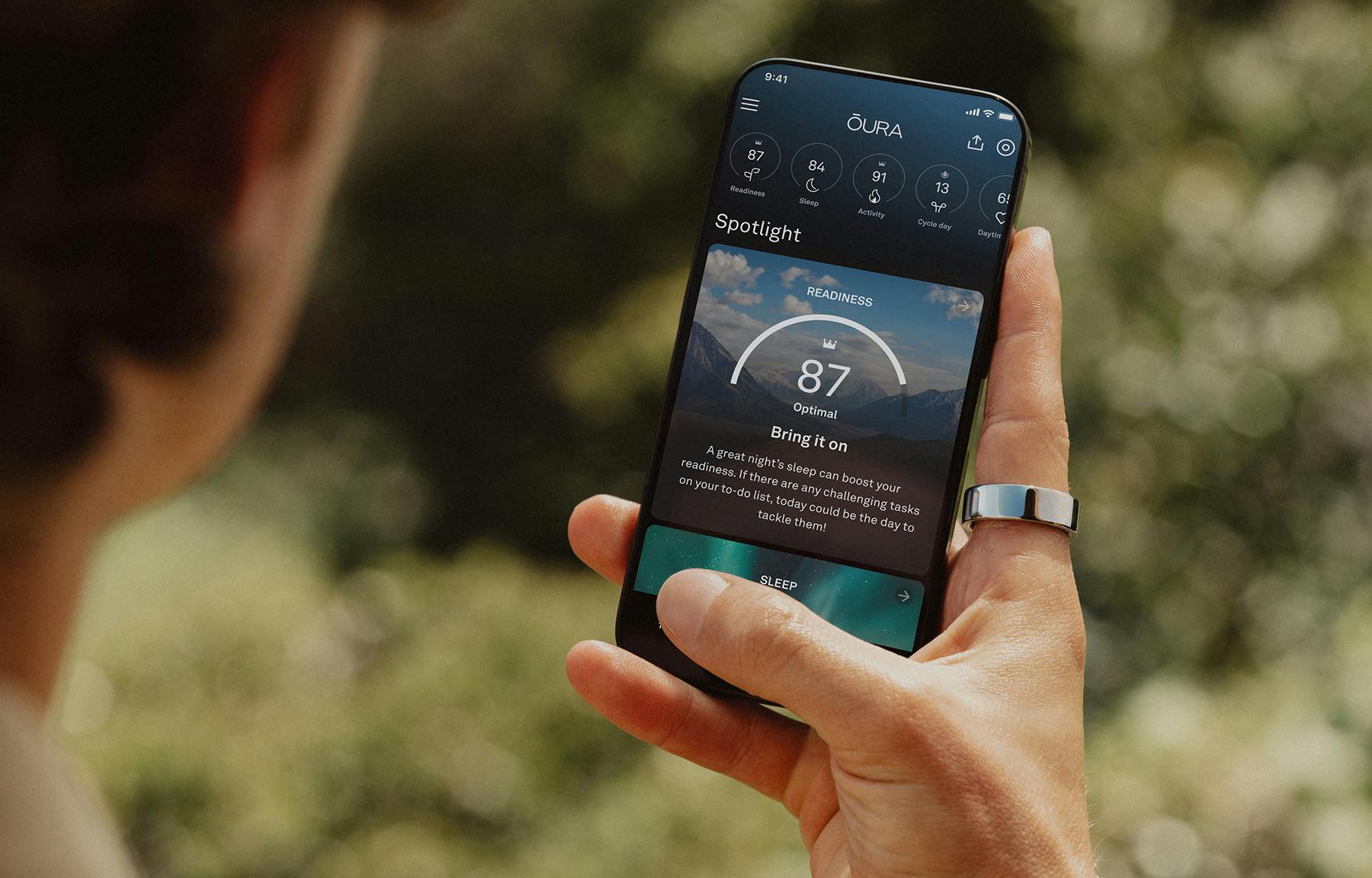
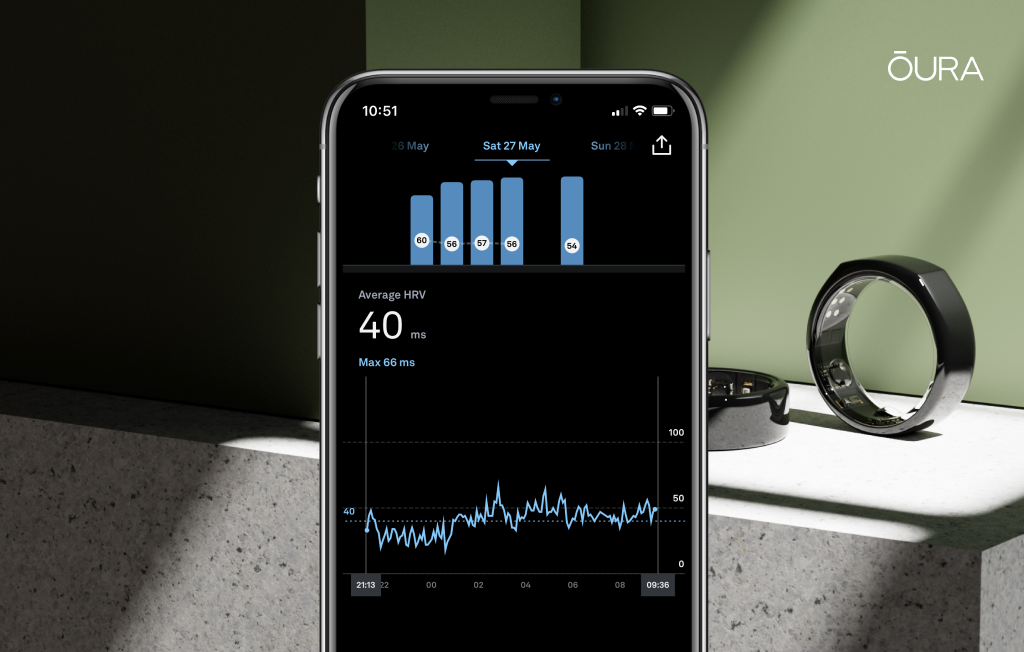
Monitoring your HRV (heart rate variability) with a smart ring like Oura over time can provide clues about your physical and mental health. That’s why HRV is one of the contributors to your daily Readiness Score in the Oura App, which tells you how primed your body is for the day ahead. Oura members can also track their long-term HRV data in the Trends tab to monitor their stress levels over a period of time.
| Oura metric | Time frame | Signals and purpose |
| Daytime Stress | Current and recent daytime patterns | Uses HR, HRV, temperature, motion, and related signals to estimate physiological stress and recovery |
| Resilience | 14-day lookback | Combines daytime stress load, daytime Restorative Time, and nighttime recovery measures such as Sleep Score, resting heart rate, HRV balance, and Recovery Index |
| Cumulative Stress | 31-day view | Shows the effects of accumulated stress across sleep metrics, stress patterns, and activity |
Oura’s measurements of HRV have been shown to be highly accurate, according to a 2020 study. Specifically, when compared to a medical-grade ECG device, the Oura Ring showed extremely high agreement for heart rate variability (r² = 0.980).
READ MORE: How Accurate Are Oura’s Heart Rate & HRV Measurements?
How to Read Your HRV Data
Your HRV data is useful when you compare it to your own baseline, and when your readings come from similar conditions night to night. One low reading on its own might be due to a rough night’s sleep, a couple of drinks, a hard workout, an illness, or any other short-term stressor.
Because so many things influence HRV, no single reading can pin down one cause on its own — which is exactly why context and trends matter.
Different Types of Stress & Their Effects on HRV
Different stressors can affect HRV in different ways. A short-lived change and a sustained pattern provide different information.
Acute Stress
Acute stressors are brief and intense. Examples include exams, high-pressure deadlines, traffic accidents, or public-speaking anxiety.
Acute stress can cause a temporary decrease in HRV. After the situation ends, HRV may return toward baseline. This response shows that the ANS is reacting to a stressor, although HRV alone cannot determine whether the stressor was psychological, physical, or environmental.
Chronic Stress
Chronic stressors can continue for weeks or months. Examples include unresolved trauma, grief, chronic illness, ongoing anxiety, or sustained work and life pressure.
When stress continues, the SNS may remain active and limit recovery. Chronic or prolonged stress can reduce average HRV over time.
Over a long period time, a lower-than-baseline HRV may also lead to physical health issues, including diabetes, heart disease, and high blood pressure, and mental health problems, such as depression and anxiety.
READ MORE: How Stress Affects Your Sleep
Monitoring HRV For Stress
HRV monitoring can help you track how your HRV changes over time, providing insights into the state of your nervous system. It can reveal how your body responds to both external stressors and internal factors such as your thoughts, emotions, and feelings. While HRV can be measured from medical tests like an electrocardiogram (ECG), the easiest way to track it is with a wearable device like Oura Ring.
Here are four ways you can use your Oura HRV data to detect stress:
1. Establish Your Baseline
After a few weeks of wearing your Oura Ring, the Oura App will establish your baseline HRV. Once you know your baseline, you’ll be able to detect any significant variations.
2. Identify Which Lifestyle Factors Impact Your HRV
HRV monitoring allows you to observe your HRV patterns during certain situations. Being aware of which lifestyle factors or changes impact your HRV and tagging them can help you figure out the cause and take steps to reduce the effects of stress.
Examples of situations that cause significant deviations from the baseline HRV include:
-
- Illness or injury: During periods of illness or injury, you may notice lower HRV while your body recovers from physical stress.
- Lifestyle changes: Significant changes in sleep patterns, exercise routines, or diet can affect your HRV. For example, if you adopt a new exercise regimen, it may alter your HRV measurements because exercise puts your body under stress.
- Alcohol: Alcohol puts your body under stress, causing a higher resting heart rate and lower HRV. An analysis of Oura member data revealed that, after drinking alcohol, 70% of people experienced a reduction in HRV, and the median decrease was 12.1%.
- Chronic stressors: When a stressor is present for an extended period, it’s considered chronic. This may include physical or mental health conditions, such as cardiovascular disease or anxiety disorder, or external factors, such as the death of a loved one.
- Different times of your menstrual cycle: A 2020 meta-analysis found that HRV decreases significantly during the second half of the menstrual cycle.
RELATED: Why Am I So Tired on My Period?
3. Stay On Top of Daily Stress Management
Everyone goes through stressful moments in life. Some are momentary — like giving a presentation at work — and others last longer, for example, life transitions like moving or new family dynamics, like navigating a divorce or adjusting to a new baby in the house.
Understanding your baseline HRV and which stressors affect it the most can help you take steps to manage stress in your daily life, incorporating activities that activate the PNS, calm the SNS, and give your body and mind a break from stress.
Stress management techniques to consider adding to your routine include:
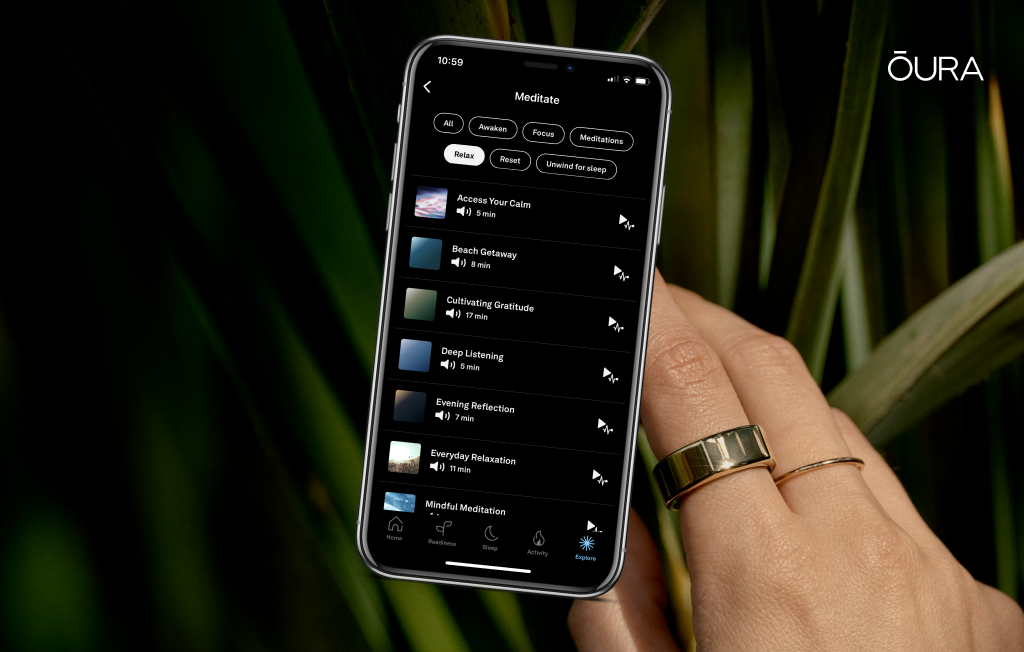
- Meditation: Numerous studies have shown that meditation can have a positive effect on HRV. Use the guided meditations among the Explore content of the Oura App to relieve stress and receive biofeedback data after every session.
- Take a green walk: Studies have shown that “green walks” — i.e., walking in nature or green suburban areas — improve HRV responses. One 66-year-old Oura member doubled his HRV by switching late-night gym sessions for gentle evening walks.
- Hit the mat: Similarly, yoga has been shown to activate the PNS and increase HRV.
- Just breathe: One study found that practicing resonance frequency breathing (slow breathing at around three to seven breaths per minute) improved HRV parameters in participants.
RELATED: 10 Simple Breathing Exercises for Sleep and Relaxation
 4. Track Your Long-Term Trends
 4. Track Your Long-Term Trends
Tracking your HRV with Oura’s Trends feature over a chosen period of time — weekly, monthly, or even yearly — enables you to identify long-term trends and patterns related to stress. This becomes even more powerful when you “tag” what is going on when you notice that you are stressed. It can reveal whether your stress levels are consistently high or if certain periods or events impact your HRV. Armed with this data, you’ll be better equipped to manage your stress.
Frequently Asked Questions About HRV & Mental Health
Can HRV indicate stress or mental-health problems?
HRV can indicate a physiological response associated with stress. A sustained change from your baseline may reflect ongoing physical or psychological strain, especially when it appears with changes in sleep, resting heart rate, or recovery.
HRV cannot diagnose anxiety, depression, or another mental-health condition. Treat it as one source of personal health information rather than a clinical test.
Can a smart ring measure HRV accurately?
A smart ring can measure HRV during rest or sleep with optical sensors. Oura’s measurements showed high agreement with a medical-grade ECG in a 2020 study, with an r² value of 0.980.
Accuracy depends on the measurement conditions, sensor contact, motion, recording period, and metric used. Medical evaluation may require an ECG or another form of clinical monitoring.