



Women's health is not a single chapter. It's a continuum, from the first menstrual cycle through perimenopause and beyond, marked by constant physiological change that rarely pauses between clinical visits.
Yet most OB-GYNs see patients in snapshots: a brief annual exam, a problem-focused appointment, a lab result. What happens in between, the sleep disruption, the cycle irregularities, the subtle temperature shifts that precede symptoms by days, often goes untracked, underreported, or simply unremembered by the time a patient sits down in the exam room.
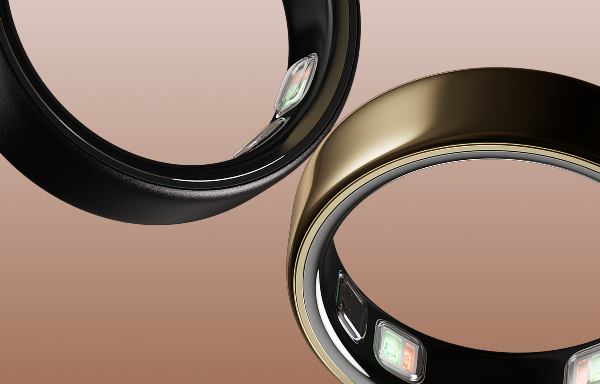
Oura Ring was designed for exactly this space.
With an average wear time of 23.5 hours per day, Oura captures near-continuous physiologic data across the metrics that matter most in women's health: skin temperature, heart rate variability, sleep quality, cycle phase, and more. That longitudinal signal, which builds over weeks and months, is where patterns emerge, deviations become visible, and meaningful clinical conversations can begin.
A Practical Resource for Clinicians
To help OB-GYNs and women's health clinicians understand how Oura data maps to the questions you're already asking, we've created An Oura-Informed Guide to Women's Healthcare, a practical resource covering what Oura measures, what's been validated, and how it applies across clinical scenarios from preconception counseling to perimenopause management.
Download the Oura Women's Healthcare Guide
Supporting Care Across the Reproductive Lifespan
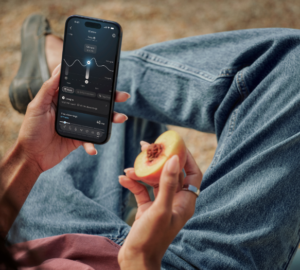
Oura's women's health features are designed to meet patients where they are and to give clinicians a clearer picture of what's happening between visits.
- Cycle Insights uses physiological data influenced by hormonal fluctuations, including heart rate, HRV, temperature trends, and respiratory rate, to identify cycle phases, label the day of ovulation, and predict period start dates. For OB-GYNs evaluating abnormal uterine bleeding or suspected PCOS, Cycle Insights offers a longitudinal view of cycle length and variability that moves beyond patient recall.
- Ovulation Detection is grounded in validated signals. In a 2025 study using LH testing and ultrasound as reference standards, Oura's algorithm detected ovulation in 96.4% of cycles, narrowing the fertile window from approximately 7 days (calendar method) to 2.5 days, and maintaining performance even in cycles with more than 7 days of length variability. For patients trying to conceive, and particularly those with irregular cycles where calendar methods fall short, this precision matters.
- Pregnancy Insights overlays key biometric data, including temperature trends, resting heart rate, HRV, and respiratory rate, with gestational week-level context to help patients understand the physiological changes unfolding during pregnancy. Clinicians can use it to support education around normal early physiologic shifts.
- Menopause Insights incorporates the Menopause Impact Scale, a clinically validated questionnaire developed by Oura that quantifies how perimenopausal symptoms affect daily functioning. Rather than returning a score alone, the feature maps responses to longitudinal biometric trends, including sleep continuity, HRV, and temperature trends, so patients can arrive at appointments with an objective, domain-level picture of their symptom burden.
RELATED: How Oura Is Advancing Cardiovascular Health Through Science and Care
Validated Signals, Real Clinical Utility
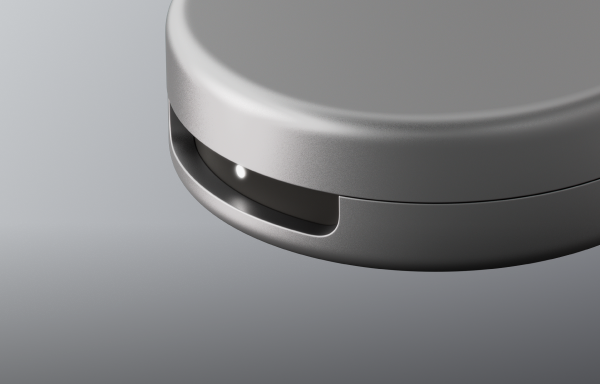
Oura's accuracy has been independently evaluated across its core measurements. Its sleep staging algorithm achieves 79% 4-stage accuracy validated against polysomnography, and a Harvard-led multi-device study found Oura Ring to be the most accurate wearable tested for 4-stage sleep classification. Heart rate and HRV measurements show very high agreement with ECG (r² = 0.996 and 0.980, respectively). Skin temperature is tracked at approximately one reading per minute, with overnight trends forming the foundation for cycle detection and period prediction.
These signals don't replace diagnostic tools, but they can flag meaningful deviations from an individual's baseline, including irregular cycle patterns, worsening sleep quality, and declining HRV across the perimenopausal transition, and support more targeted clinical conversations when patients come in.
Download the Oura Women's Healthcare Guide
LEARN MORE: Advancing Human Health with Oura: Bridging Everyday Life and Clinical Care