









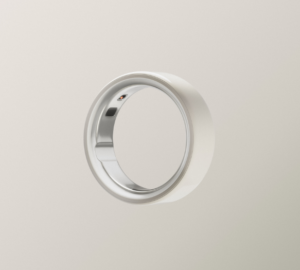
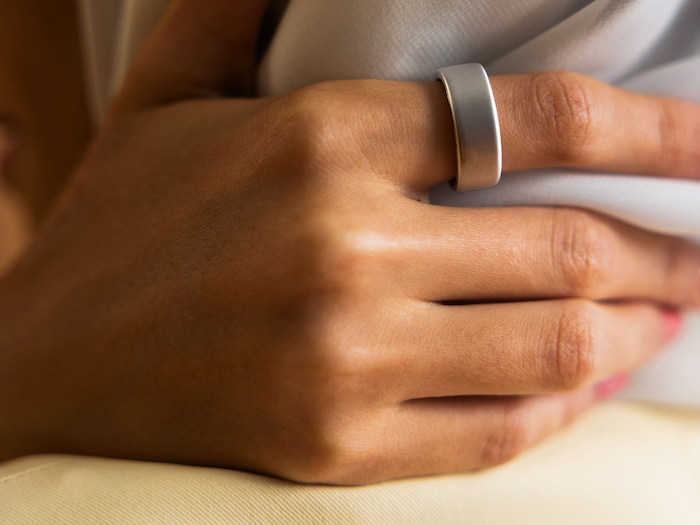
Researchers at the Centre for Sleep and Cognition at the NUS Yong Loo Lin School of Medicine have found that pulse signals recorded overnight by Oura Ring carry enough information to estimate vascular age, a key indicator of cardiovascular health.
Vascular age (known as Cardiovascular Age in the Oura App) reflects how well or how poorly a person’s arteries are aging relative to their actual age. Someone in their 50s may have the arteries of a 70-year-old, and vice versa. That gap matters: when vascular age outpaces chronological age, cardiovascular disease risk rises.
RELATED: 8 Ways to Improve Your Cardiovascular Health
Moving Beyond the Lab: From Clinics to Wearables
Measuring vascular age has traditionally required specialist equipment confined to clinics and research labs. This process is costly, difficult to scale, and out of reach for most people.
The new study, published in PLOS Digital Health, takes a different approach. The researchers analyzed photoplethysmography (PPG) signals (the same light-based pulse readings used by fitness trackers to measure heart rate), recorded overnight by Oura Ring.
These passive nighttime recordings, collected while participants slept, were then used to estimate vascular age using both traditional feature-based methods and a deep learning model.
Despite differences in how the ring and the clinical fingertip sensor capture pulse waveforms, the deep learning model predicted vascular age with similar accuracy from both devices, with a mean error of six to seven years and strong agreement with participants’ actual ages.
READ MORE: The Accuracy Advantages of Finger-Worn Wearable Devices
Importantly, ring-derived estimates were also associated with blood pressure, a standard cardiovascular health marker.
«Signals collected passively during sleep can be translated into clinically meaningful insights about vascular health,» said Gizem Yilmaz, a research fellow and co-first author of the study. «This opens the door to scalable, longitudinal monitoring of cardiovascular health using devices people already wear in their daily lives.»
Crucially, the team built and validated their own analytical pipeline rather than relying on proprietary algorithms inside the device. This independence makes the findings more scientifically transparent and reproducible.
The Future of Preventative Care
“Our findings lend credence to moving cardiovascular monitoring out of the clinic and into everyday life. Wearable-derived vascular age could, in time, support earlier detection of cardiovascular risk, reinforce positive lifestyle habits, and feed into large-scale population health studies,” says Prof. Michael Chee of the Centre of Sleep and Cognition, Yong Loo Lin School of Medicine, National University of Singapore, the study’s principal investigator.
“This study also shows that Oura’s proprietary PPG sensing approach and data collection during sleep make nightly readings feasible in the field,” Chee adds.
Future work will look at how well these approaches hold up across more diverse populations and whether wearable-derived vascular age can play a role in clinical decision-making and preventive care.
READ MORE: How to Lower Your Cardiovascular Age