





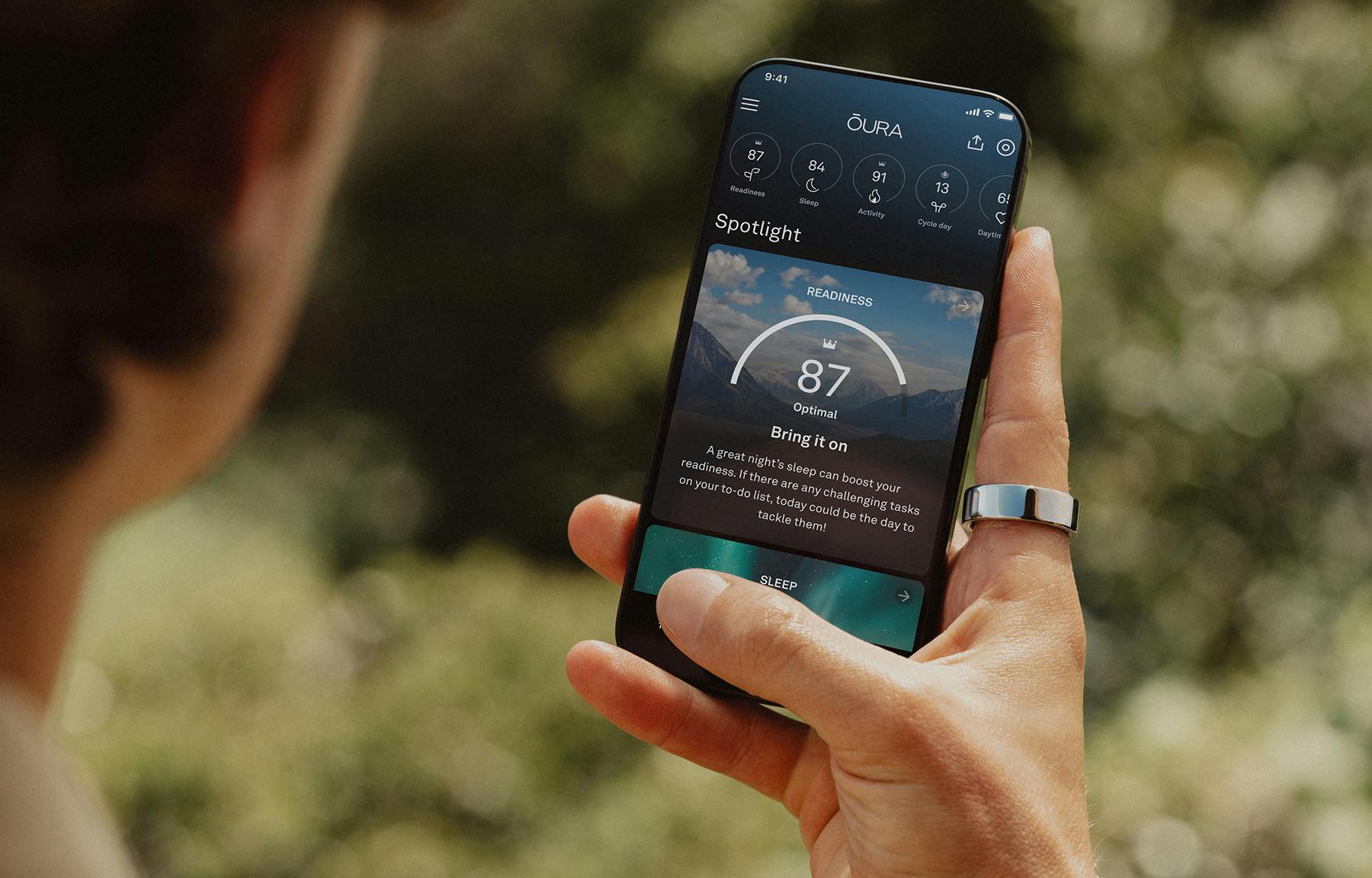




The “New Year, New Me” energy often starts with a bang on January 1, then fizzles out by the 15th. But is that actually the case for the Oura community?
We took a deep dive into the data from over 200,000 members across the globe to see if those resolutions are sticking.*
A Return to (Fitness) Form
When it comes to movement, the data confirms that January is a time when many of us head back to (or sign up for!) the gym. In the United States, Oura Members logged 19.5% more workout days in January than in December.
And this isn’t just a temporary boost. January activity levels actually mirror the peak movement we see during the sunny spring and summer months (April–August). For many, January isn’t just a month of “trying harder”—it’s a return to baseline fitness after the relative slowdown of the fall and holiday months.
RELATED: Why Strength Training Is a Game-Changer for Metabolic Health
The “Dry January” Effect
One of the biggest drivers of a January health reset is the decision to cut back on alcohol. While “Dry January” is a well-known cultural trend, we saw it reflected clearly in Oura Member data.
Among members who used Tags to track their habits, the share of those using the “no alcohol” tag jumped from 1.36% in December to 1.97% in January. That represents a 45% relative increase in members consciously tracking their shift away from nightcaps and holiday cocktails to alcohol-free swaps.
READ MORE: Oura Data Reveals the True Impact of Alcohol on Sleep
The Rise of Resilience
Resilience at Oura measures your ability to withstand and recover from stress.
Between December 2025 and January 2026, we saw a significant upward shift in the community’s Resilience distribution.
- Adequate and Limited levels decreased by a combined 5 percentage points.
- Strong and Exceptional levels increased by a combined 5 percentage points.
This suggests that the post-holiday shift—likely driven by “Dry January” participants, a return to consistent sleep schedules, and fewer social obligations—is paying dividends in how your body handles stress.
For members who moved from Solid to Strong Resilience, they didn’t just have one or two better days. On average, they saw a 44.9 percentage point decrease in “Solid” days and a 46.9 percentage point increase in “Strong” days.
RELATED: How to Get Motivated: 5 Neuroscience-Backed Tips That Actually Work
How to Keep the Momentum With Oura
If you’re one of the many members who leveled up this January, the goal now is consistency.
- Prioritize sleep consistency: Consistency is key for high-quality sleep. Research shows that individuals with consistent sleep schedules—going to bed and waking up at similar times each day—experience significantly better sleep quality and daytime energy levels compared to those with irregular schedules.
- Monitor your stress: Keep an eye on your Daytime Stress levels and check your Cumulative Stress to see how your body is responding to your increased workout load and everyday stressors over time.
- Listen to your body: If your Resilience begins to dip, don’t be afraid to take a rest day.
Whether you’re moving from Adequate to Solid or Strong to Exceptional, Oura Members are not only making progress toward their goals, but also building a more resilient foundation for the year ahead.
LEARN MORE: How to Boost Your Resilience, According to Oura Members
*Data Analysis Notes:
- Findings are based on a random global sample of 200,000 Oura Members and their resilience data from December 2024 to January 2026.
- Monthly user counts vary; typical monthly active users in the sample may be less than 200k.
- Resilience distribution shifts may be influenced by multiple factors, including reduced holiday stressors, dietary changes (e.g., Dry January), and stabilized routines.
- Workout data excludes low-intensity activities like housework and general walking to focus on intentional exercise.
- Observed shifts in Resilience levels (e.g., Solid to Strong) are statistically significant comparisons between Dec 2025 vs. Jan 2026 and Dec 2024 vs. Jan 2025.