









Why is it so easy to plan a workout, but so hard to actually put on your shoes and go to the gym?
If you’re struggling to get motivated, you are certainly not alone. We all want to live a healthier life, yet the gap between knowing what is good for you and consistently following through is a common challenge.
The good news? Motivation is not a finite resource you are either born with or without; it is a dynamic state that can be cultivated and managed.
Below, explore the science behind why you may be feeling stuck, learn the psychological drivers that influence your decisions and actions, and understand the steps to take to make lasting changes.
Your Brain on Motivation
 Motivation isn’t a singular force; rather, it is shaped by external elements, individual beliefs and attitudes, and how your brain processes reward, says Sofia Strömmer, PhD, Oura’s in-house behavioral scientist.
This complex blend means that even when some factors are manageable, the brain’s autonomous reward system can lead to a „push and pull” feeling. This explains why you might know the necessary steps—but still struggle to act on them.
The “Fuel:” Dopamine
“At its core, motivation is a dynamic process regulated by your dopamine system,” says Strömmer. Dopamine, often referred to as the “feel-good” neurotransmitter, is released when you accomplish something, making you feel good and encouraging you to repeat the behavior.
“However, dopamine isn’t just involved in reward-based motivation,” says Strömmer. “It also helps in decision-making, guiding your choices about whether or not a behavior will be worth the effort based on anticipated rewards.”
In other words, we are motivated by dopamine to seek rewards, whether those rewards are immediate or delayed.
The “Pilot:” Your Prefrontal Cortex
The prefrontal cortex (PFC) plays a crucial role in regulating the dopamine process. Responsible for higher cognitive functions, the PFC helps you plan, set goals, and make decisions, essentially steering your actions so that they align with your long-term desires.
The PFC has to work in tandem with the dopamine system to overcome the temptation of instant gratification. But this is where things can get tricky.
The “Calculation:” Your Brain’s Internal Cost-Benefit Scale
“Your brain essentially does a cost-benefit analysis when deciding whether to follow through with a habit or behavior,” says Strömmer. “Your brain weighs the value of pursuing a goal (reward) against the effort (cost) required to achieve it.” In other words: It’s a balancing act between the dopamine system and the PFC, affected by a variety of factors, such as stress, lack of sleep, hunger, or your emotional state.
When you’re well-rested and feeling good, the effort of getting started on a task feels lower. But when you’re stressed, tired, or emotionally drained, even small actions can feel overwhelming.
“When your ability to make decisions through the PFC diminishes, the dopamine system may push you towards immediate gratification,” Strömmer explains. (That’s why ice cream feels like a great solution after a bad day!)
Why Starting Is the Hardest Part: 4 Psychological Roadblocks
If you’re feeling stuck, it’s likely not a character flaw—it’s a neurological hurdle. Here is why your brain is designed to resist the „start” button.
The Temptation of “Cheap” Dopamine
Certain habits—like scrolling social media, drinking alcohol, eating sugary snacks, or hitting „snooze”—provide an instant, high-reward payoff for zero effort. When your brain compares the high effort of a 30-minute workout to the low effort of a TikTok feed, the „cheap” dopamine wins every time.
READ MORE: Sober Curious? 6 Proven Strategies to Drink Less
The Gap Between Action & Reward
You may want to exercise regularly for better heart health in the long-term, but since the benefits aren’t immediate or easily measurable, staying motivated can be challenging. “When you factor in the stresses of daily life,” Strömmer adds, “it makes total sense that you’d skip a workout to relax in front of the TV.”
Default Mode Takes Over
When you want to do something and you spend time thinking and daydreaming about it, it can actually be counterproductive. Rumination activates a network in the brain known as the default mode network. Research shows that when it’s activated, it can amplify self-doubt, making it harder to take action.
The „Failure Filter”
Your brain is a master at data storage. If you’ve tried a specific diet or habit before and „failed,” your brain stores that as a high-cost/low-reward experience. When you try to start again, your brain anticipates the failure before you even begin, effectively cutting off your dopamine supply to „save” you from disappointment.
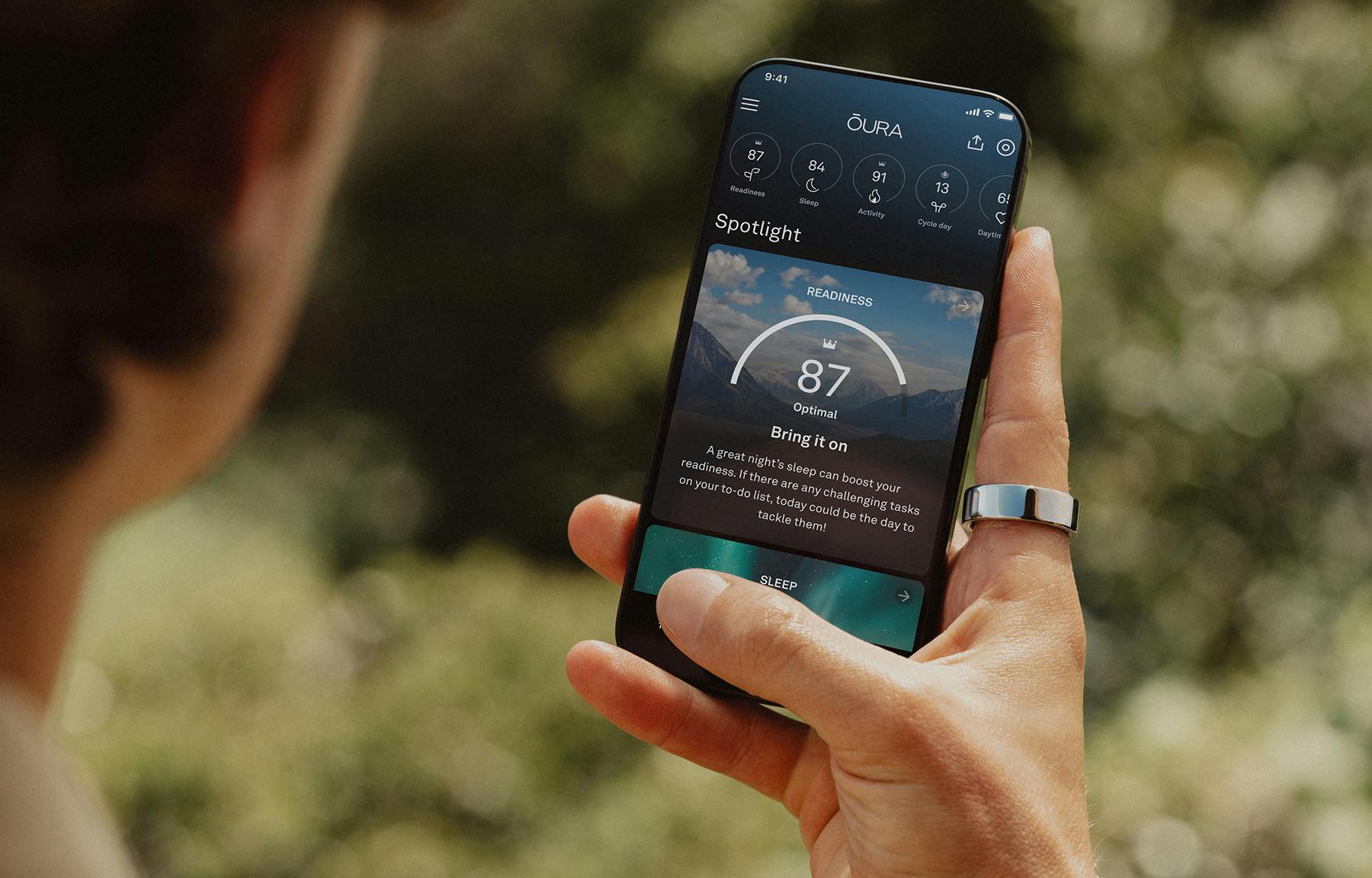
| Member Tip: Let Oura do the thinking. Oura’s new app design helps you bridge the „reward gap” by visualizing your health in real-time. Check your „Today” tab for a quick win on your Readiness Score and visit the „My Health” tab to see the long-term impact of your habits on your heart health and Stress Resilience. |
5 Behavioral Science-Based Tips for Motivation
Now that we’ve covered the „why,” here is the „how.” Use these five strategies to tip the brain’s cost-benefit scale in your favor.
 1. Shrink your goals.
“One of the most effective ways to stay motivated is to break down your bigger goal into smaller, more manageable steps,” says Strömmer. Research shows that setting small wins leads to more consistent motivation.
So instead of aiming for “eating healthier” as a broad goal, set specific targets like “eat two servings of vegetables with every meal.” These smaller, more achievable targets make you feel successful each time you hit them, releasing dopamine and keeping you motivated to keep going.
2. Leverage habit stacking.
Behavioral science has shown that habits are more likely to stick when you anchor them to something you already do regularly. This is known as habit stacking. For example, if you want to start drinking more water, stack it with a current habit, like having a glass of water after you brush your teeth in the morning or before your coffee.
Research suggests that creating simple “routines” around your desired habits helps your brain form an automatic link, reducing the amount of willpower needed over time.
| Member Tip: Find out how your daily habits impact your health with Discoveries. When you regularly tag a behavior or habit, you may get notified of a statistically significant association between it and your biometrics. |
3. Go for „micro-rewards.”
One reason why motivation can be hard is that the reward feels too distant (no dopamine release!). Research suggests that rewarding yourself after completing the positive behavior can create positive reinforcement loops, helping the behavior become more ingrained over time.
So to increase motivation, link the habit with some type of instant gratification. For example, once you’ve finished the task you’ve been putting off, you could reward yourself with a few minutes of relaxation or your favorite beverage.
4. Motivate with joy.
“An easy and effective way to build motivation is to connect the behavior with enjoyment,” says Strömmer. If going to bed earlier feels like a chore, it’s hard to stay motivated.
But if you create a calming bedtime routine, like listening to soothing music or reading your favorite book, your brain will start to associate the behavior with enjoyment. This, in turn, releases dopamine and strengthens the habit.
READ MORE: 14 Science-Backed Ways to Wind Down Before Bed
5. Lean on your circle.
Research shows that people who have social support are more successful in maintaining positive habits. Get a friend, family member, or coworker to join you with your new habit and it might help you stay on track—and enjoy the process!
| Member Tip: Join an Oura Circle to share your high-level health data (Readiness, Sleep, and Activity Scores) with your friends or family. It’s a great way to keep on track with a health, sleep, or activity goal. |