



When Ashley W. and her husband decided to start a family, they did what many couples do: they started trying and waited. A year later, nothing had happened.
« We decided to go to the doctor,' » Ashley says. At their first appointment, her doctor asked a list of questions and came to a quick conclusion: He told them he was “99% positive” that Ashley had PMOS, formerly known as PCOS. (In May 2026, a global group of experts changed the name of polycystic ovary syndrome, or PCOS, to polyendocrine metabolic ovarian syndrome, or PMOS, to better reflect that it affects metabolism and hormones throughout the body, not just the ovaries.)
That diagnosis set Ashley on a new path, one where she’d have to find another way to understand her body as she was trying to conceive. Here’s how Oura helped.
A Diagnosis That Changed the Plan
Polycystic ovary syndrome, or PCOS, is one of the most common hormonal conditions in women of reproductive age. PCOS can cause irregular or absent ovulation, which makes it one of the leading causes of trouble getting pregnant. It can also make at-home ovulation tests less reliable. Those tests look for a surge in luteinizing hormone (LH), and people with PCOS can have higher baseline LH levels, which can lead to confusing results.
Ashley’s doctor told her as much. « My doctor said ovulation tests may not even be accurate for you, » she says. « So we kind of have to go about this differently. »
Why Ashley Turned to Oura
Ashley wasn’t ready to accept that there was no way to see what her body was doing. « I feel like there has to be something that would indicate that I’m ovulating, » she remembers thinking.
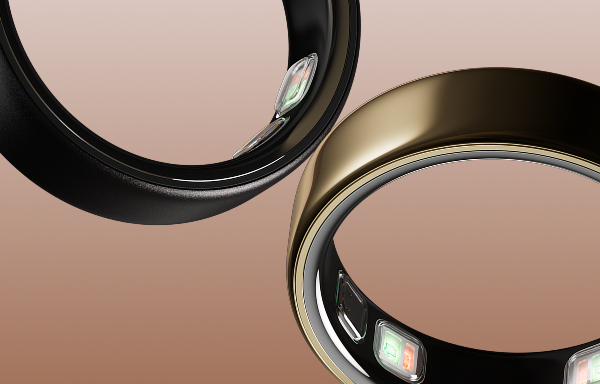
She already knew about Oura. Several friends at work wore one, and she’d asked them about it. After her diagnosis, she and her husband dug into the research. One feature stood out: Oura measures your skin temperature every night and shows how it shifts from your personal baseline.
That matters because body temperature follows a predictable pattern across the menstrual cycle. After ovulation, the hormone progesterone rises and nudges your temperature up slightly. It stays elevated until your next period. Oura can pick up these subtle shifts, often smaller than a degree, because it measures continuously while you sleep, when outside factors interfere the least.
Seven Months of Data and One « Aha » Moment
At first, Ashley checked her data regularly. Then life got busy, but Oura kept collecting data in the background. One day, she went back and looked at about seven months of temperature trends, and a pattern jumped out.
« There was always a spike at the same time of the month, like exactly, » she says. « I said to my husband, ‘I think that we found my ovulation period. I’m almost positive that we found it.' »
The consistency is what convinced her. « I saw that temperature spike, and it was so consistent that I knew it had to mean something. »
It did. Ashley and her husband timed their next attempt around the pattern she’d found. After one month of trying on that new schedule, they were pregnant.
« I’m sure maybe at some point we would have gotten pregnant, » Ashley says. « But the fact that I found that, and the very next try is when we got pregnant because of that data, was just so huge. It has totally changed our lives. »
Seeing the Link Between Stress and Sleep
Temperature wasn’t the only thing Ashley tracked. At the time, she worked as a customer success manager at a tech company. She describes it as a high-pressure environment with big goals and constant demands. Her Oura data reflected it.
« I’m a really good sleeper normally, but I was sleeping horribly, » she says.
Eventually, she decided the job wasn’t right for her and left. The change in her data was immediate. « The second I quit that job, I was sleeping wonderfully, » she says. « I could actually see how huge the difference was. »
That shift mattered for more than just how she felt day to day. Ongoing stress and poor sleep can both affect hormones, and Ashley was aware that stress « doesn’t help when trying to get pregnant. »
Using Oura During Pregnancy
As Ashley heads into her third trimester, she’s paused cycle tracking for now, but she still checks the Oura App daily.
Pregnancy Insights. Ashley also started exploring Oura’s Pregnancy Insights feature, which offers trimester-specific information and guidance as your body changes.
Sleep consistency. « Sleep is different now, and I’m tired all the time, » she says. As her pregnancy progresses and she gets more uncomfortable, Oura helps her keep tabs on her routine. « It just takes more to get a good sleep routine going. »
Stress and heart rate. Keeping stress low during pregnancy is a priority. « I’ve been trying really hard to keep that at a minimum, » she says. Watching her heart rate helps her notice « when I’m in a high-stress zone. »
Next up: life as a new parent. Many new parents are surprised to learn they’re getting more sleep than they feel like they are, even with multiple wake-ups overnight. Ashley is curious to see her own data. « I’ve been very curious about what this is going to look like when he’s here, » she says.
RELATED: Understand and Improve Your Sleep as a New Parent
Oura is not a medical device and is not intended to diagnose, treat, or prevent any condition, including infertility. Oura should not be used as a form of birth control. If you’re having trouble getting pregnant, talk to your healthcare provider.