






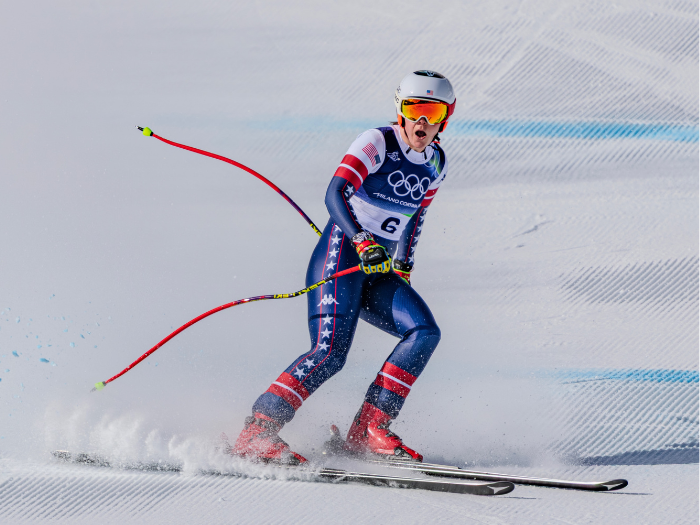
As a longtime member of Team USA, Breezy Johnson is no stranger to the highs and lows of downhill skiing. After a knee injury sidelined her from Beijing 2022, the 30-year-old American speed skier returned to that very same slope in 2026 and captured her first Olympic gold medal.
With Oura, Breezy balances the extreme physical toll of her sport with a deeply disciplined approach to recovery and mental health. Below, the newly crowned Olympic champion discusses how she uses her Oura data to find her edge, her unique race-day rituals, and what it takes to remain resilient in the pursuit of gold.
RELATED: ŌURA Named Official Wearable of Team USA and LA28 Olympic and Paralympic Games
Winning gold for Team USA at Milano Cortina 2026—on the Tofane track, where you suffered the injury that kept you out of Beijing—empowered you to “reclaim the narrative,” as you described it. How did you build your resilience and manage the mental noise of your history during your gold-medal run?
I think it’s taken some time. I had four years to come to terms with everything that happened. I think a lot was in realizing that the Tofane track didn’t actively do anything that ended my hopes for 2022. It also didn’t help and wasn’t going to in 2026. Realizing that you have to claim every moment and taking ownership of the battles and cost that your journey has taken, understanding that it won’t continue to be easy helped me find peace in what happened and ultimately prevail going forward.
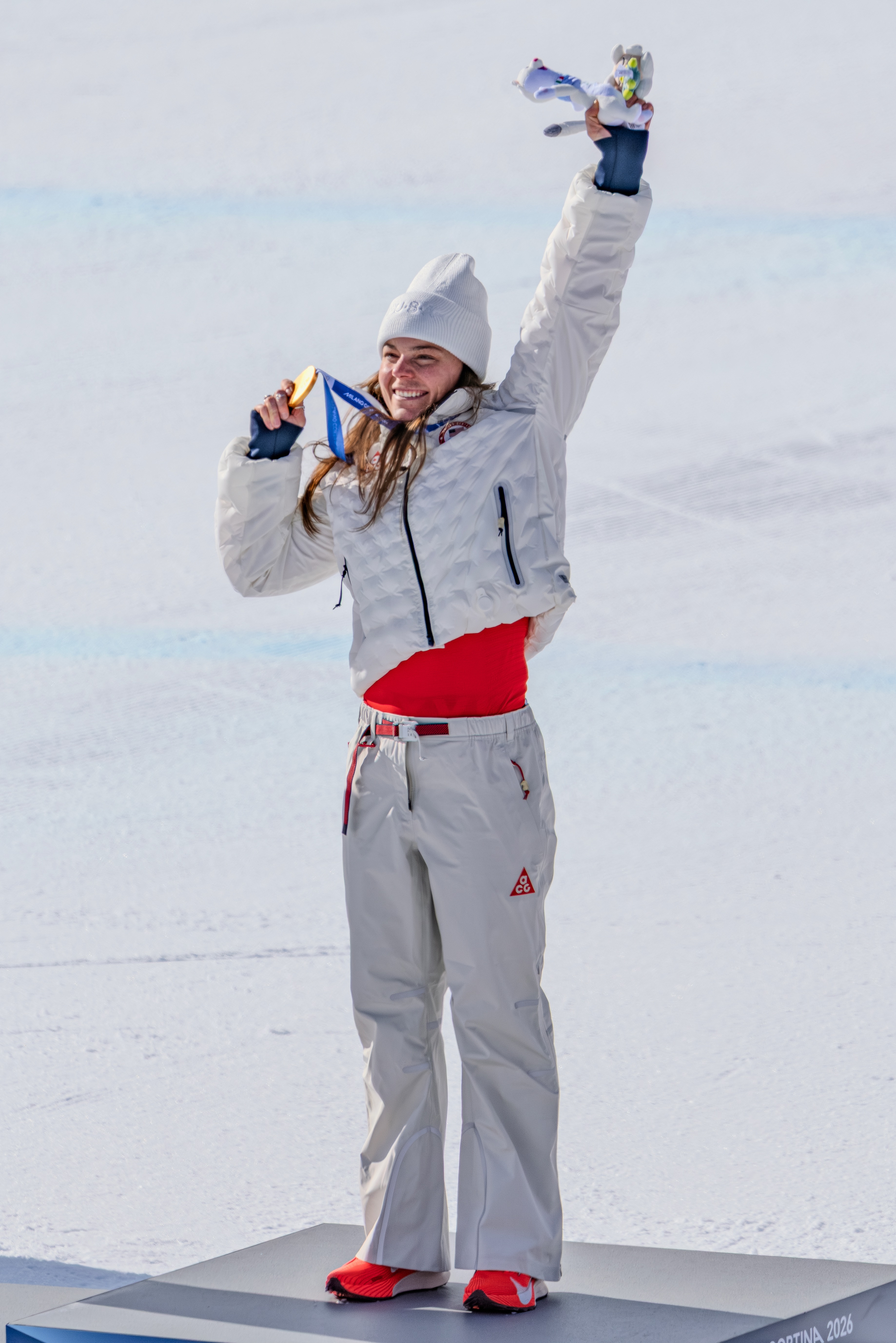 How did you use Oura during the Olympic Winter Games to ensure your body and mind were prepped for the incredible toll that skiing takes on the body, both physically and mentally?
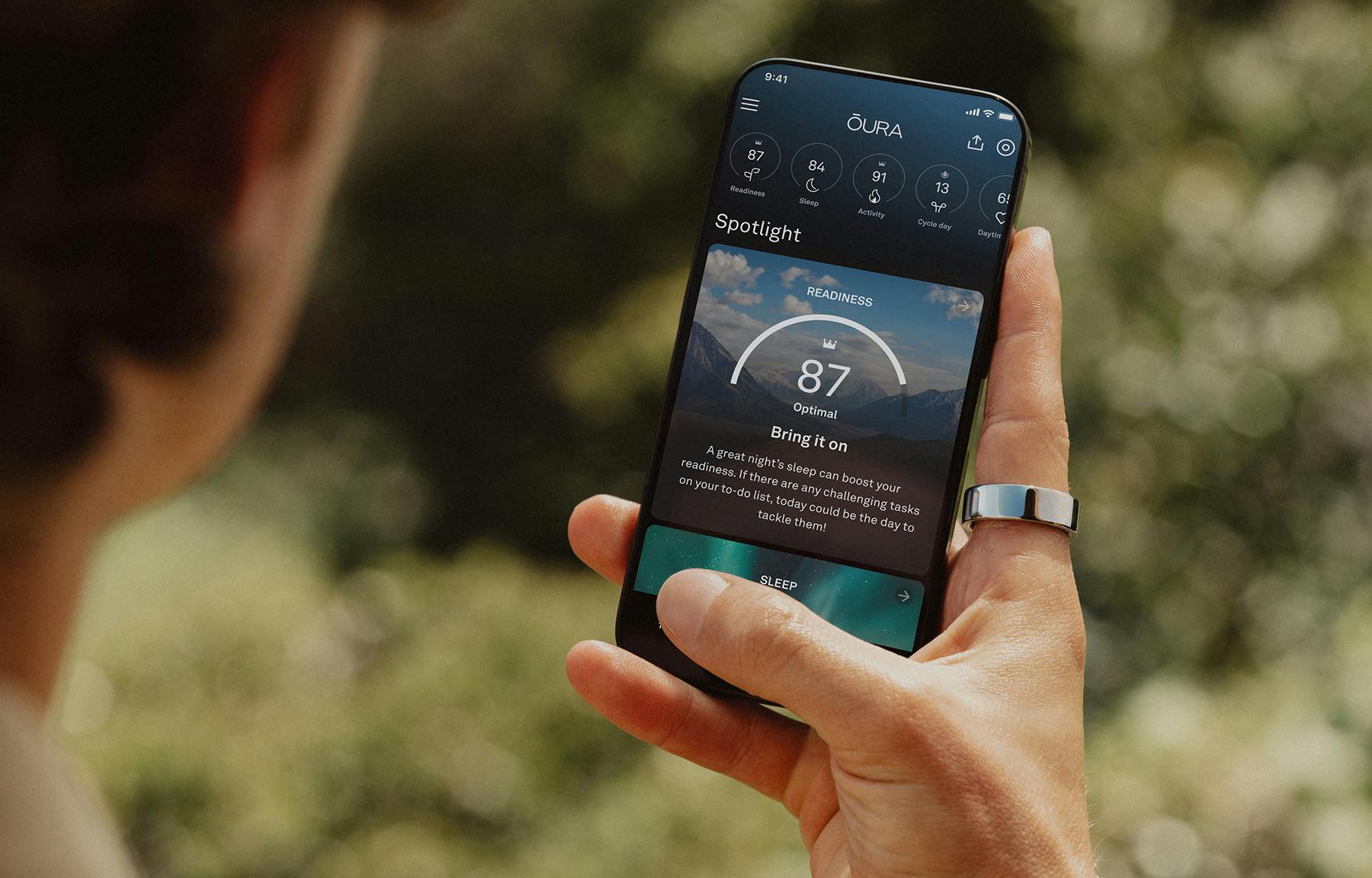
I use Oura to find that last edge. I think knowledge is power. I’m always hungry to learn and having been an Oura member for about six years now, I’ve finally figured out strategies to maximize my recovery. Everyone is unique, but some of mine are:
- I can drink, but not when I am also being taxed by skiing. Usually one drink doesn’t slow me down, but in the winter it does, so I avoid it unless I have a week off and even then I still only have one glass during the season.
- I struggle with naps because I can often switch into “sleep brain” and have a 4-hour rather than 40-minute nap. Scheduling something afterwards helps with this and I never nap later than 2:30pm.
- I try to eat as early as possible to maximize my sleep. I have also found that progressive relaxation lowers my sleep latency time, which can be a struggle for me.
READ MORE: How Alcohol Affects Your Health & Oura Data, Plus 6 Tips to Cut Back
“I use Oura to find that last edge. I think knowledge is power.”
Which Oura metrics do you pay attention to most during training?
I look a lot at heart rate variability in season. This can give me a sense of how stressed my body is. I love looking at my Sleep Scores, though I often try to focus more on my time in bed and sleep time on race day to control the controllables, but not get overly stressed about one low Sleep Score.
You’re famous for knitting before races. How does that help you manage your stress levels? Any other surprising mental health “hacks”?
I love knitting because it is very relaxing and monotonous. It calms my mind and gives my hands somewhere to send nervous energy to on race day.
My other sleep/mental health hack is progressive relaxation: Every night before bed I progressively relax my body, starting at my toes, and if I move significantly I start over. Then when I am completely relaxed, I visualize the course of the next Downhill I have to do. This ritual relaxes me about the task I have to do the next day (or a few days out) and is a good time for a great habit to practice the courses every day.
Now that you’ve added Olympic gold to your resume, what does your recovery strategy look like after the Games?
Post-Gold I headed to Milan for some spectating and time with my fiancé. I find quality time with friends and family fills my cup. I also do a small strength and conditioning block to try to fill up any missing strength and conditioning that may have been lost in the last three months of training and racing before the final stretch of World Cups.
Lighting round… Morning person or night owl?
Morning all the way.
Must-have item or habit for a good night’s sleep?
I travel with my own travel pillow.
First Oura data point you look at in the morning?
HRV
#1 hype song on your playlist?
“The Smallest Man Who Ever Lived” by Taylor Swift.
If you had to choose a signature Italian dish to celebrate with after Milano Cortina 2026, what are you picking?
Linguini Carbonara. I love a carbonara but I like linguini more than spaghetti.
READ MORE: How U.S. Paralympian Brenna Huckaby Uses Oura to Redefine Resilience and Avoid Burnout