







Brenna Huckaby, U.S. Paralympian, is no stranger to the history books. As the most decorated Paralympic snowboarder in history, she has spent her career defying gravity and expectations alike.
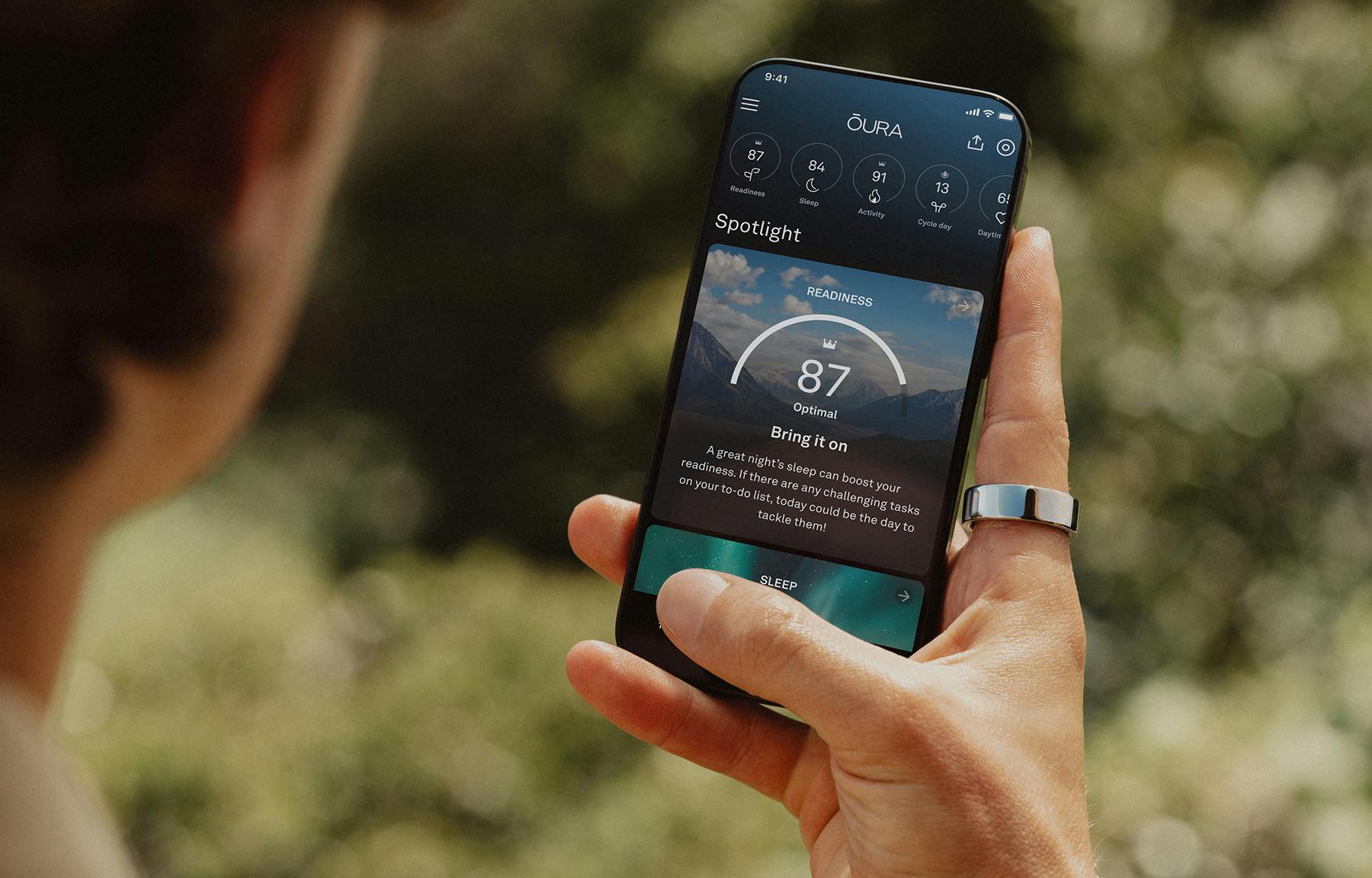
In advance of the Milano Cortina 2026 Paralympic Winter Games, she’s traded the „grind at all costs“ mentality for a more nuanced approach to performance. Between managing ADHD, navigating the physical demands of being an above-the-knee amputee athlete, and the reality of raising two children, Brenna has found an ally in her Oura Ring data.
By using her Readiness and Sleep Scores to give herself permission to rest, she’s learned that true resilience isn’t just about how hard you can push—it’s about how well you can recover.
We sat down with Brenna to discuss her journey to the Paralympic Games, how she integrates recovery into the chaos of motherhood, and why this Paralympics feels different than any that came before.
RELATED: ŌURA Named Official Wearable of Team USA and LA28 Olympic and Paralympic Games
As you prepare for your third Paralympics in Milano Cortina, you’ve not only established yourself as a leader in the parasnowboarding space but you continue to build your legacy as the most decorated Paralympic snowboarder in history. How does it feel this time around preparing to compete for Team USA at the Paralympic Winter Games?
I feel like in my last two Paralympics I had something to prove. My first Games I wanted to prove myself on snow—prove that I was the best. My second Paralympics was to prove to myself that I have nothing to prove to anyone and that I am worthy of love regardless of where I end up on the podium. This Games, I have nothing to prove. The competitor in me, of course, wants to break records, but at the end of the day I just want to enjoy the experience. This Games feels light, fun, and all about enjoying the ride.
What are some of the unique challenges you’ve faced in this stage of your career, and how have you overcome them? How has your definition of „resilience“ changed over time?
I think one of the biggest hurdles for me is competing at a disadvantage. I will be the only above the knee amputee woman competing in my events at the Paralympics and that is, of course, a physical challenge but also a mental one. For me, resilience is showing up for myself no matter how hard it is. I know I am worth showing up for so why would I quit on myself simply because it’s hard? There’s always something to gain in those moments and that’s what I live for… even if in the moment I may question it.
For an elite athlete, the line between peak performance and burnout is thin. How do you use your Oura data in your training?
In the past it was so easy for me to overtrain. I had a mindset that more was better and constantly pushing myself past my limits would make me a better athlete. I bought an Oura Ring to better understand if that was really the case. What I learned is to trust that rest is important. I use my data to track how I am feeling, how I am performing, and what adjustments I can make to improve both aspects. It became apparent very quickly how helpful rest and recovery are to my performance and to my mental health.
„My Oura data helped me give myself permission to rest.“
You’ve been open about managing ADHD and the challenge of maintaining consistency. How does having tangible data from Oura Ring help you stay grounded and stick to your routines during training?
I think a lot of my overtraining was an overcompensation for my ADHD. I was afraid that if I rested, I wouldn’t start back up again. My Oura data helped me give myself permission to rest and then seeing my Readiness Score improve gave me encouragement to start again. It helps me make decisions for myself which then helps me trust myself.
 You’ve mentioned that you’ve moved away from viewing self-care as just „skincare and baths“ toward „intentional healing.“ What are your non-negotiable recovery routines that keep you physically and mentally prepared?
I need to journal weekly. Journaling helps me see myself with more clarity and allows me to figure out what I need. I also do daily physical recovery. I rotate between mobility, lacrosse ball, foam roller, and massage gun. Taking time to listen to my body and giving it what it needs allows me to perform.
As a mother of two, finding time for intentional rest isn’t always easy. How do you balance the physiological need for recovery with the active, high-energy demands of parenting?
A lot of my mobility time happens in my living room while watching movies with my kids. I may not get as much alone time to take care of myself as I’d like, but I make sure to find the time. I also am a firm believer in timeouts for myself. Sometimes I’ll go take a few minutes to scribble in my journal outside or hide in the bathroom to take a breath for myself. I know self-care doesn’t have to be these major moments. They can happen in 5-minute bursts throughout the day.
Beyond the podium, what is the one specific moment or experience in Italy you are most excited to share with your family?
I’m just excited to make this moment memorable. I’m excited to share smiles and laughter and lightness. There’s no specific “moment” that I am after, instead it’s a specific feeling of celebration with the people I love.