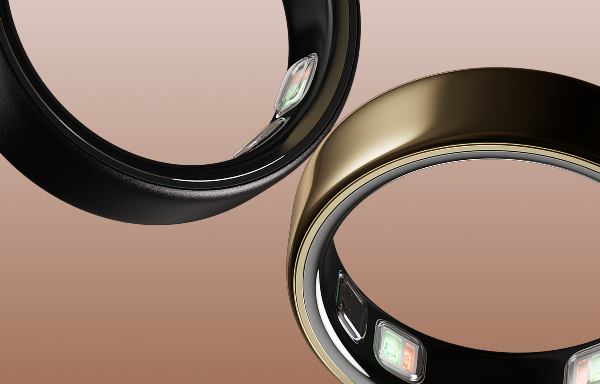





Today, Oura is proud to announce the expansion of our proprietary Menopause Impact Scale (MIS) through a growing ecosystem of ten partners across specialty menopause care, primary care, telehealth, and hormone tracking. The integrations, which will include Alloy Health, Oova, Xella, Pomelo, Wisp, Maven, Mira, Hertility, Gennev, and Tia, extend the MIS beyond the Oura App into real-world clinical and health workflows, giving women and their care teams a more consistent way to understand menopause’s impact and make more informed care decisions.
“Women navigating menopause can find themselves explaining the same symptoms to different providers, while the true impact on their daily lives gets reduced to a snapshot in time,” said Dorothy Kilroy, chief commercial officer at Oura. „That’s why we developed the MIS: to give women and their providers a consistent way to track menopause’s impact over time. We built it the way we build everything at Oura—starting with science. Our science and clinical teams reviewed the literature and evaluated the scale across nearly 3,000 women—capturing how menopause affects daily functioning and wellbeing.“
As the MIS expands into partner workflows, it can help connect what women report with longitudinal context that follows them from one care setting to the next.
“By integrating the MIS into how our partners work with patients, we’re giving women a measurement that travels with them and gives every provider they see the same starting point,” Kilroy added. „That’s the difference between managing symptoms in isolation and recognizing menopause for what it is: a multi-year health transition that deserves consistent, connected care.”
An expanding partner ecosystem across menopause care
Through these partnerships, Oura is moving the MIS beyond a point-in-time questionnaire and into the clinical and health workflows women already use. The ten partners represent a range of care models—from virtual menopause clinics and integrated women’s health providers to hormone and biomarker platforms. Each partner brings the MIS into a different point in the care journey, giving women and their care teams a more consistent way to monitor menopause symptoms and inform care discussions.
This new ecosystem will span ten partners across a range of health areas, including:
- Menopause-focused clinical care: Alloy Health, Gennev, Wisp, and Pomelo, bringing structured quality-of-life measurement into specialist, virtual, and digitally delivered menopause care workflows.
- Primary and integrated women’s health care: Maven, Tia, and Xella, integrating the MIS into a broader care model that includes perimenopause, well-woman care, and cardiovascular health.
- Hormone and biomarker tracking: Oova, Mira, and Hertility, pairing MIS impact scores with hormone, biometric, and other health data to create a more complete view of the perimenopause experience.
Chief Medical Officers across Oura’s partners recognize the value of the MIS:
“Disrupted sleep, brain fog, shifts in mood, lower energy,” said Dr. Elizabeth Cherot, chief medical officer at Unified Women’s Health, the parent company of Gennev and the largest OBGYN clinical network in the country. “Women experience the signs and symptoms of this transition in their day-to-day life long before any of it comes up in an exam room. What’s great about the MIS is that it brings her lived experience into the clinical conversation. By integrating evidence-based clinical care with data from her daily life, we’re giving our clinicians at Gennev a better way to track and support her needs as they evolve.”
“As a physician, one of the most important things I’ve learned is that no two menopause experiences are alike,” said Dr. Sharon Malone, chief medical advisor at Alloy Health. “It’s not enough to know what symptoms a woman is having. We need to understand how these symptoms are affecting the quality of a woman’s life. At Alloy, that individual experience is at the heart of how we think about menopause care. There is no one size fits all. The Menopause Impact Scale provides another meaningful layer of context that a woman and her doctor can bring to the conversation. The more we know, the better we are able to help women make informed decisions not just about symptom relief, but also about their long-term health.”
Together, Oura’s partners create a common measurement layer that can support more consistent, connected care across settings. That shared layer can support longitudinal care, outcomes research, clinical decision support, and more connected programs across providers and health partners—connecting what women report with the care and support they receive.
A new standard for measuring menopause impact
Menopause has historically been measured too narrowly—often through isolated symptoms and point-in-time clinical conversations—while women experience its impact across sleep, stress, cognition, self-perception, sexual health, daily functioning, and more. The MIS establishes a new standard for measuring menopause’s impact on quality of life, building on established menopause assessment tools to better reflect today’s evolving understanding and experience of menopause.
Built by Oura’s science and clinical teams, the MIS measures the impact of menopause on quality of life and daily functioning across 22 symptoms and seven domains, making these symptoms not only easier to understand, but also easier to act on. When combined with continuous Oura data on sleep, stress, recovery, and metabolic health, the MIS connects lived experience with longitudinal context, showing how what women report may relate to broader patterns in health over time. The team evaluated the digital-first instrument with more than 2,900 participants ranging in age from 21 to 85 using modern psychometric methods and comparisons with established measures, and submitted the full validation manuscript for peer review.
Since launching in May, more than 600,000 members have completed the MIS, totaling more than 880,000 completions. Sixty-two percent of the MIS responders are based in the United States, with the other 38% of respondents distributed around the world. Together, these figures reflect broad global use and the repeated touchpoints needed to support longitudinal measurement.
Building on a foundation of science and validation
The MIS is the latest result of Oura’s ongoing investment in women’s health research, following the first-ever Perimenopause Report, which analyzed aggregate, de-identified data from more than 100,000 female Oura Members across early perimenopause, late perimenopause, and early postmenopause to show how hormonal changes during midlife affect sleep, heart health, mood, and more.
That work builds on Oura’s research across the reproductive health journey. In a peer-reviewed validation study of more than 1,000 ovulatory cycles, Oura’s physiology-based approach detected 96.4% of ovulations with an average error of 1.26 days, outperforming calendar tracking—including among members with irregular cycles.
Separate studies with leading academic institutions used Oura data to identify temperature increases after conception and demonstrated that Oura could predict pregnancies that would deliver before versus after the due date with 71% accuracy. Together, this body of research establishes a validated foundation for translating continuous physiological data into clinically meaningful insights across women’s health—one that the MIS now brings to menopause care.
Starting today, members can integrate their MIS results with Alloy Health, Oova, Xella, Pomelo, and Wisp, with Maven, Mira, Hertility, Gennev, and Tia integrations coming later this year.